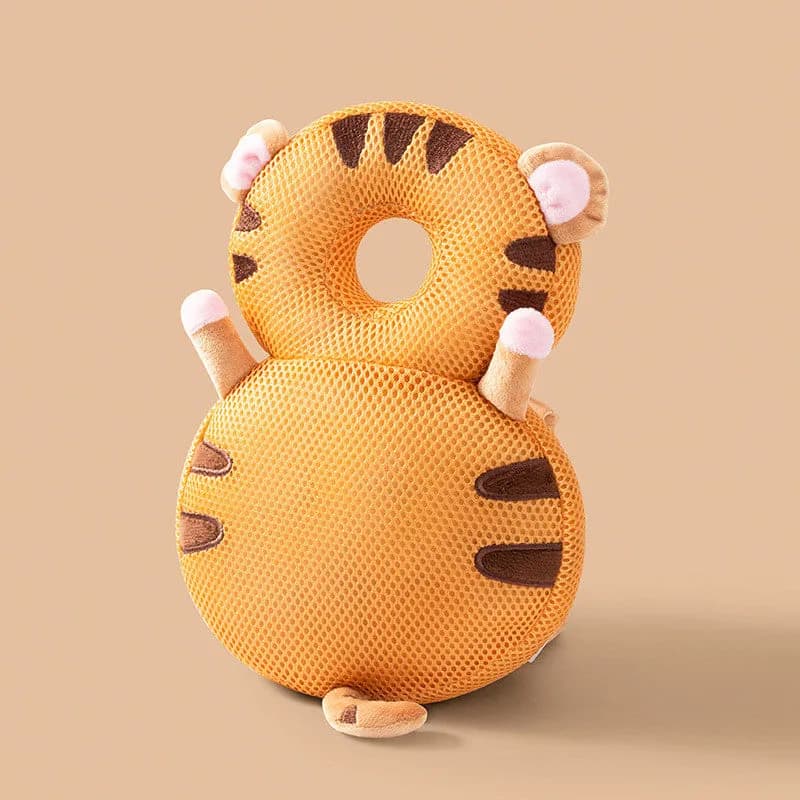
The five things that matter most in a baby head protector are: weight (under 200 g so it doesn't affect balance), breathable material (3D mesh over dense foam), coverage of both the head and upper back (not head-only), an adjustable harness that grows with the child, and machine washability. Everything else is styling.
Weight: why 190 grams isn't an arbitrary number
A baby learning to balance is extremely sensitive to added weight and its distribution. Anything heavy, or weighted unevenly, can actually work against the goal by shifting the center of gravity and making backward tips more likely, not less. The target range worth looking for is under 200 grams — light enough that a baby stops noticing it within the first few minutes of wear, roughly the weight of a large apple.
Coverage: head-only isn't enough
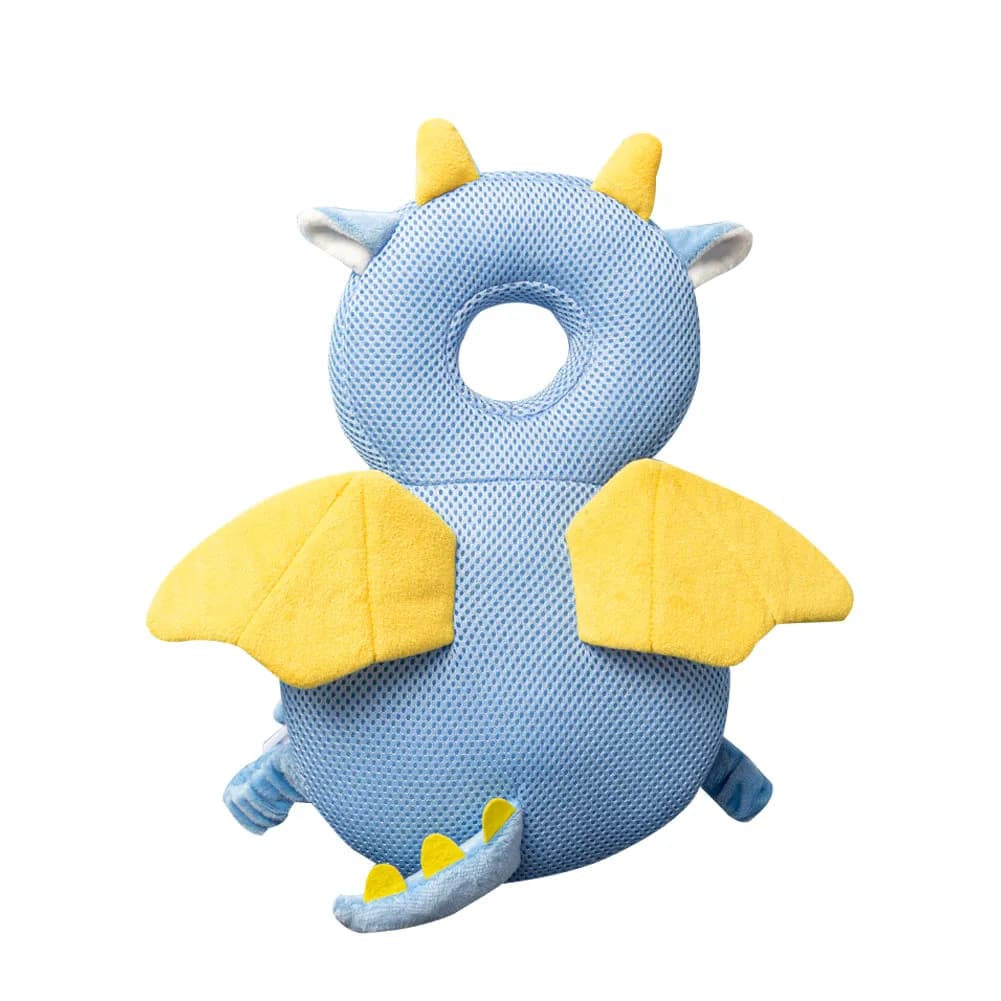
Many cheaper cushions only pad the very back of the head. But the backward-tip fall pattern common in this age range lands force across the back of the head and the upper spine together, especially once a baby is standing and cruising rather than just sitting. Look for a design where the cushion rides between the shoulder blades and extends up to protect the head — not a small pad low on the back that leaves the head exposed, or a helmet-style design that covers the head but not the fall onto the back.
Material: breathability matters more than it sounds
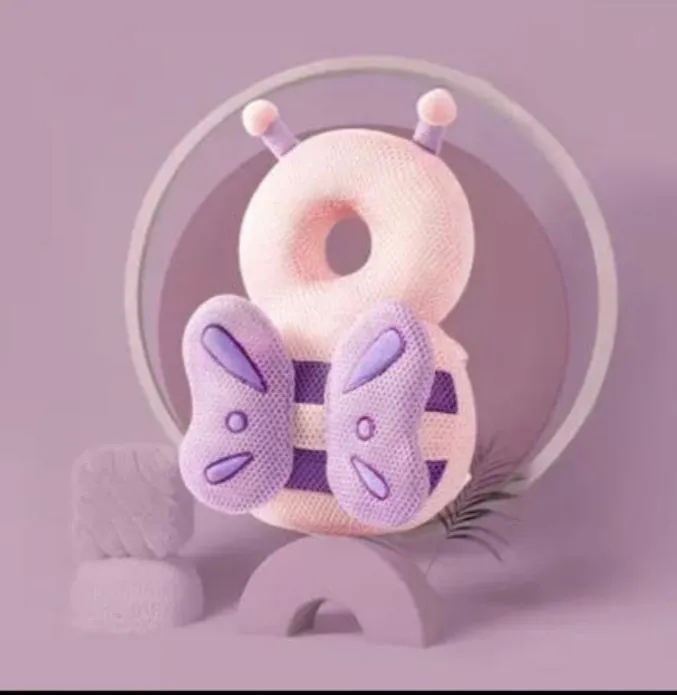
A dense foam pad without airflow gets hot and sweaty during active floor time, and a baby that's uncomfortable will fight the harness — which defeats the purpose. A 3D air-mesh outer shell over a high-elastic cotton filler solves this: enough structure to absorb impact, enough airflow that a baby stays cool through a long crawling session, and enough softness that it never feels like armor.
Harness: adjustability across the full age range
A baby at 5 months and a toddler at 22 months have very different proportions. A harness that only fits one size range means buying twice. Look for shoulder loops and a chest clip that adjust smoothly across the full 5–24 month range, with a one-handed clip that works even when your baby is mid-wriggle.
Care: it will get dirty, so it should be washable
Between spit-up, snacks, and general floor-time grime, a head protector needs to survive the washing machine — ideally on a gentle cycle in a wash bag — without losing loft or shape. If a product only allows spot-cleaning, expect it to look worn within a few months of daily use.
What doesn't matter as much
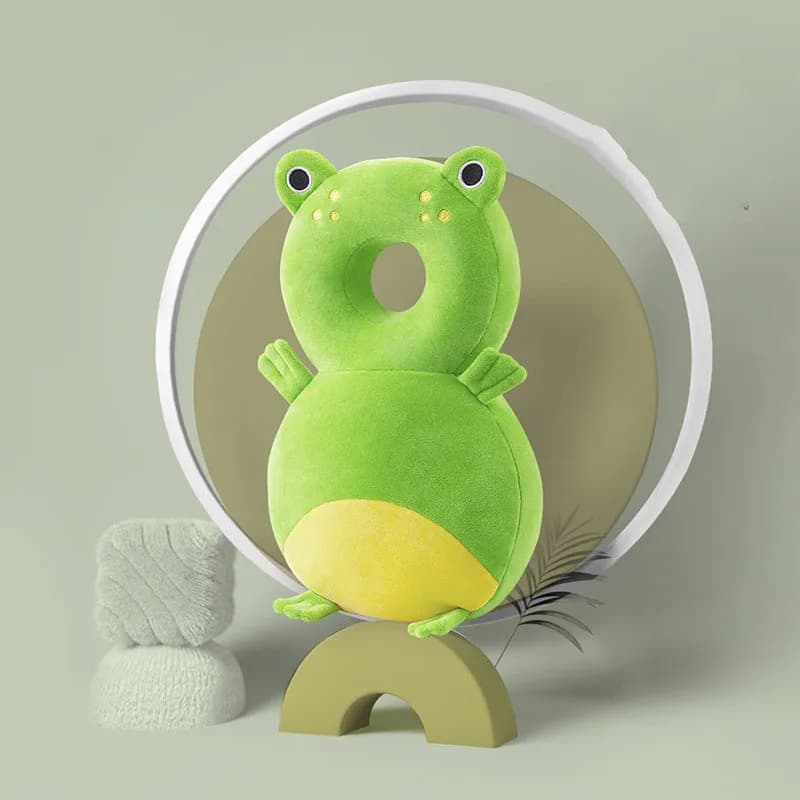
Style and color are genuinely just preference — protection is identical across designs when the underlying cushion, harness and material are the same. Choose whichever pattern your baby (or you) will be happiest putting on every day, since a protector that stays in the drawer protects nobody.

Crawl & Cuddle
A soft head & back cushion for exactly this stage
190 g, breathable 3D mesh, adjustable from 5 to 24 months — built around the backward-fall pattern this article covers.
Shop all ten stylesFrequently asked questions
How much should a baby head protector weigh?
Under 200 grams is the range to look for — heavy enough to cushion an impact, light enough that it doesn't affect a baby's developing balance.
Does a head protector restrict crawling or walking?
A well-fitted, lightweight design (under 200 g, sitting above the shoulder blades and clear of the arms) shouldn't restrict movement at all. Babies typically forget they're wearing it within a couple of minutes.
Can a baby wear a head protector for naps or in a car seat?
No. Head-and-back protectors are designed for supervised, awake floor play only. Remove it for naps, car seats, prams and high chairs, since it changes the lying angle in ways that aren't appropriate for sleep or restraint systems.
What age range is a head protector backpack for?
Typically 5 to 24 months — from when a baby starts sitting and tipping backward, through crawling, cruising and early walking, until balance and protective reflexes mature.