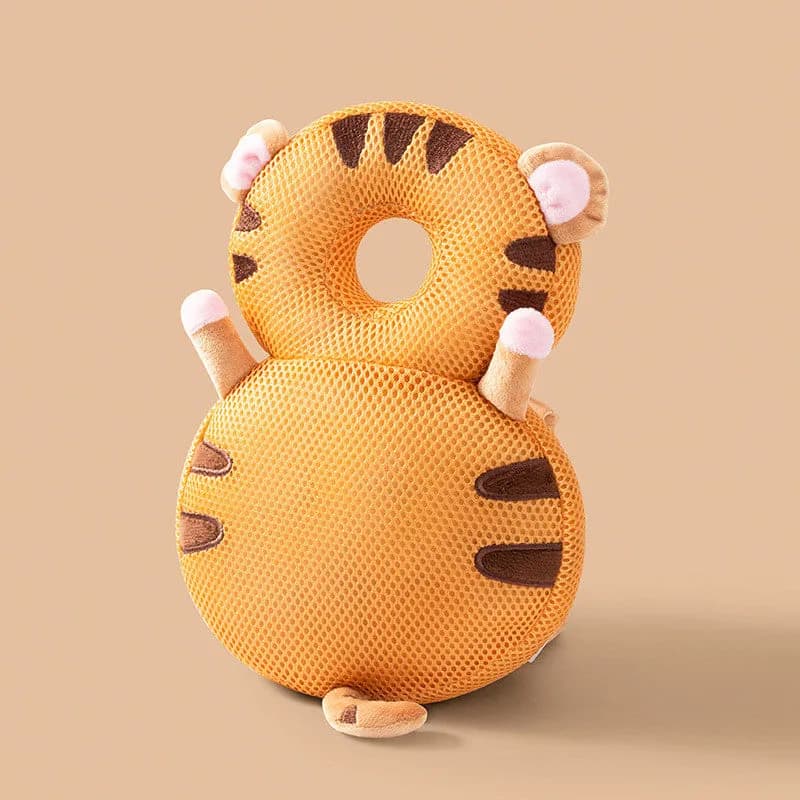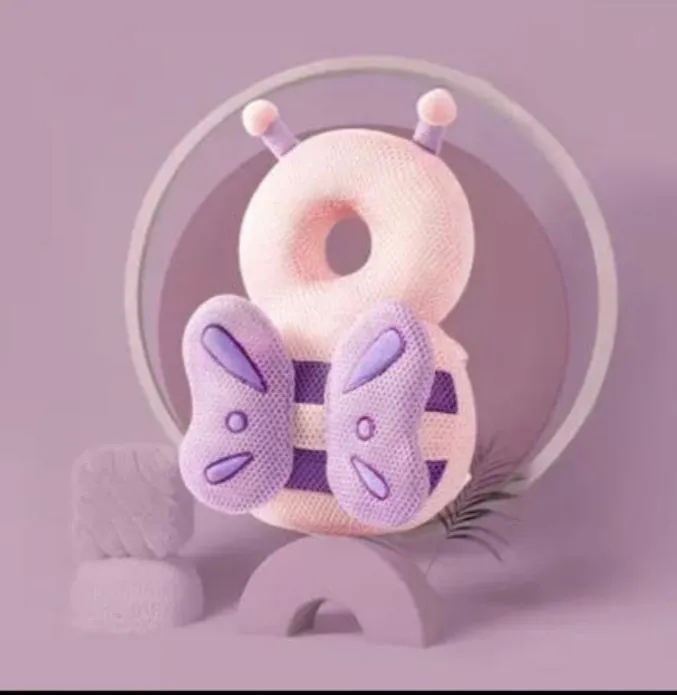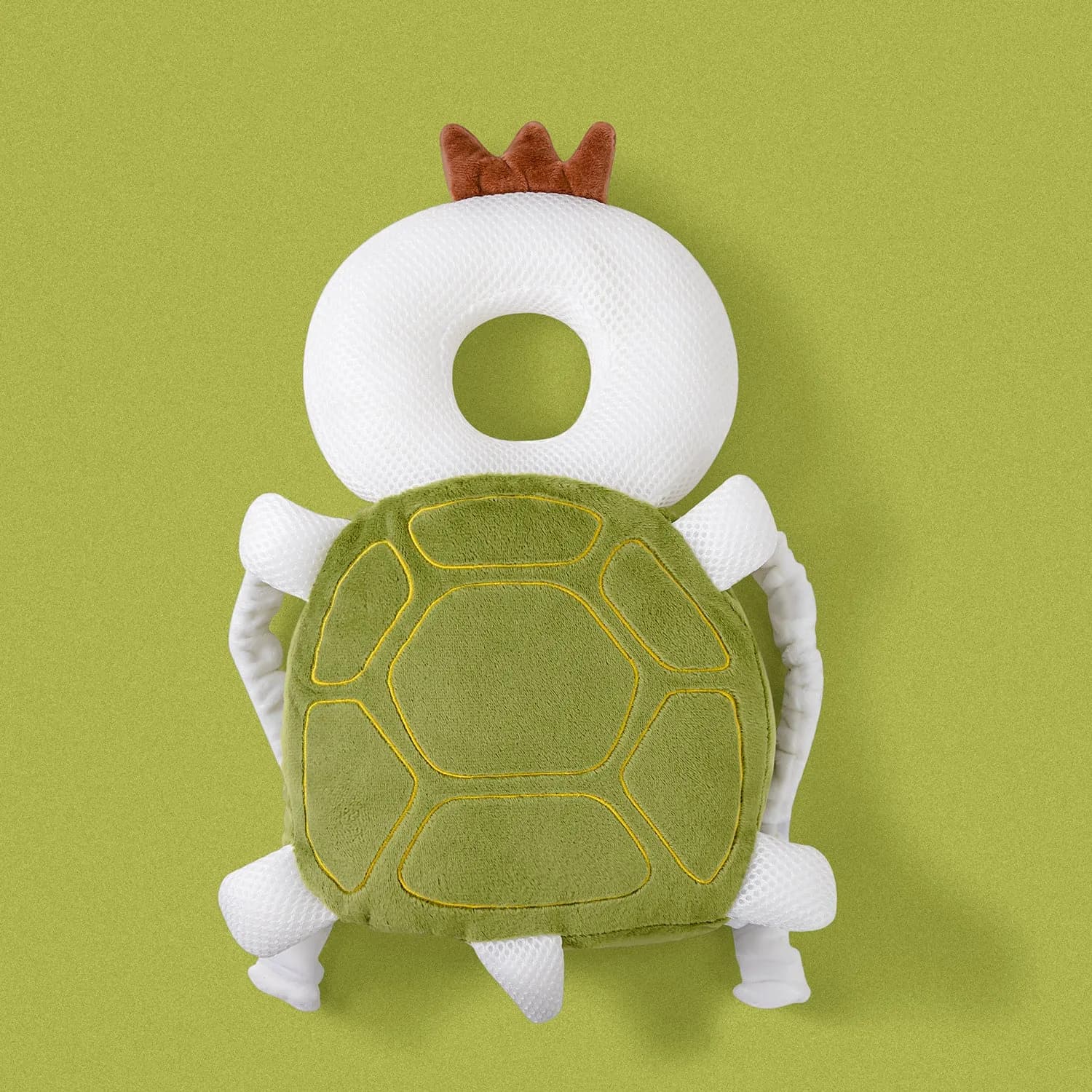
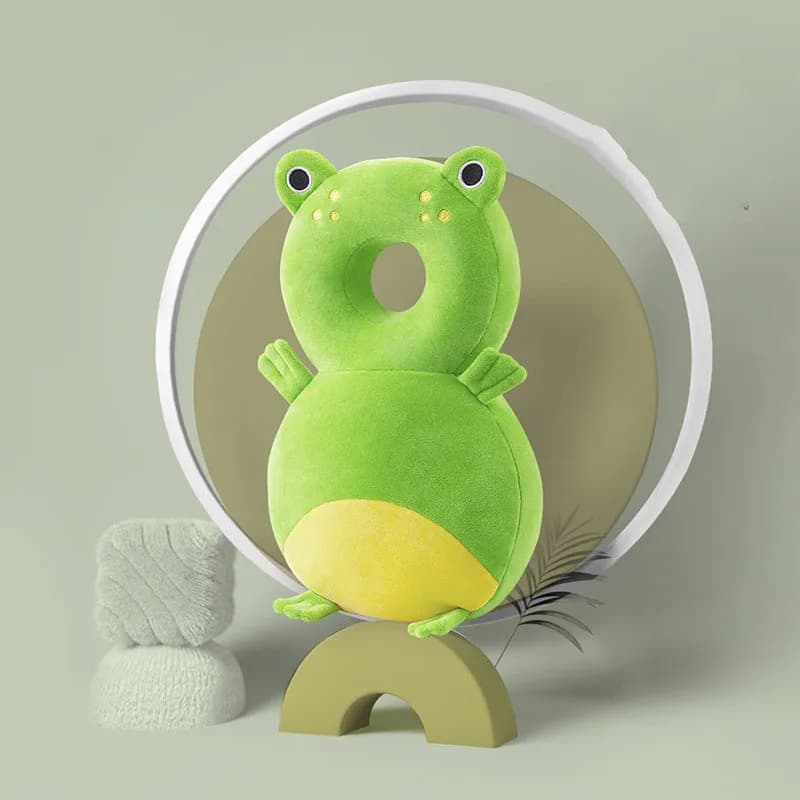
A helmet-style head protector encloses the top and sides of the head and suits babies with a specific medical need (like flat-head correction) or high-impact environments. A cushion backpack covers the back of the head and upper spine together, is lighter, cooler and easier to wear all day, and matches the backward-fall pattern most babies actually experience between 5 and 24 months. For everyday crawling, cruising and early walking, most parents find the backpack style more practical.
What each style actually protects
A helmet wraps foam padding around the sides and top of the skull, built for impacts from any direction, front, side or back. A cushion backpack concentrates padding on the back of the head and the upper spine, because that's where the force lands during the specific backward-tip fall that dominates this age range. Neither is 'better' in the abstract; they're built for different fall patterns.
Weight and heat
Helmets that fully enclose the head tend to run heavier and trap more heat, since there's less airflow around the scalp. A cushion backpack made from breathable 3D mesh (rather than sealed foam) stays lighter, usually under 200 grams, and cooler over a long stretch of floor time, which matters for how willingly a baby keeps it on.
Everyday wearability
A helmet has to be put on and adjusted around the whole head, which some babies resist more than a simple backpack-style harness with shoulder loops and a chest clip. For all-day, every-day wear during active play, the backpack style tends to get less resistance and more consistent use, and consistent use is what actually determines whether the protection helps.
When a helmet makes more sense
Helmets are the right call for specific medical situations (a pediatrician-recommended flat-head or cranial condition) or higher-impact activities where all-around head coverage matters more than everyday comfort. If a pediatrician has recommended a helmet for a medical reason, that recommendation should take priority over a general-purpose cushion.
The bottom line for typical backward falls
For the ordinary sitting-to-walking backward-fall pattern that most babies go through, a lightweight, breathable cushion backpack that covers the head and upper back together is the more practical everyday choice: lighter, cooler, easier to fit, and built around the fall that actually happens most often at this stage.

Crawl & Cuddle
A soft head & back cushion for exactly this stage
190 g, breathable 3D mesh, adjustable from 5 to 24 months — built around the backward-fall pattern this article covers.
Shop all ten stylesFrequently asked questions
Is a helmet safer than a cushion backpack for babies?
Not necessarily. They protect against different things. A helmet covers all-around head impact; a cushion backpack covers the back of the head and upper spine together, which matches the common backward-fall pattern at this age. Neither replaces the other's purpose.
Do babies resist wearing a helmet more than a cushion?
Many parents report more resistance to a full helmet than a simple shoulder-harness cushion, likely because the cushion is lighter, cooler and doesn't enclose the head.
Should I get a helmet for flat-head syndrome instead of a cushion?
Yes, if a pediatrician has recommended a helmet for a medical reason like plagiocephaly. That's a different purpose from everyday fall protection during crawling and walking.