
Most baby head bumps from short falls (off a couch, during crawling, a backward tip while standing) are not serious. Call your pediatrician or go to urgent care if your baby loses consciousness even briefly, vomits more than once, seems unusually drowsy or hard to wake, has a soft spot that bulges, won't stop crying after 30 minutes of comforting, or the bump is on the temple rather than the back or top of the head.
Why head bumps happen so often in the first two years
Between five and twenty-four months a baby's center of gravity is working against them. The head makes up roughly a quarter of total body length at this age — far more, proportionally, than an adult's — and the neck and core muscles needed to catch a backward fall haven't caught up yet. That combination is exactly why the sitting-to-standing window produces so many backward head bumps: baby pulls up on the coffee table, overbalances, and there's no reflex yet to break the fall.
It's not a parenting failure. It's a predictable stage of motor development, and it resolves itself as balance improves — usually by 20 to 24 months.
The signs that mean 'this is fine'
A bump, even a fast-swelling one on the forehead ('goose egg'), that's followed by a brief cry, quick comforting, and normal play within 15–30 minutes is the textbook mild case. Babies have thicker scalp tissue and more cerebrospinal fluid cushioning relative to brain size than adults, which is part of why minor bumps look dramatic (fast swelling) but usually aren't.
Normal behavior after a bump: crying that settles with cuddles, appetite returns at the next feed, baby is back to babbling or playing within the hour, and they sleep normally that night (waking them once to check responsiveness is reasonable, not mandatory, for a truly minor bump).
The signs that mean call your pediatrician now
Seek medical attention if any of the following show up in the hours after a fall: loss of consciousness (even a few seconds), repeated vomiting, unusual drowsiness or difficulty waking, a bulging soft spot (fontanelle), seizure activity, blood or clear fluid from the nose or ears, unequal pupil size, or a fall from a height greater than the baby's own standing height (a changing table, stairs, a bed).
Bumps on the temple deserve extra caution — the skull is thinner there and the risk profile is different from a bump on the back or crown of the head. When in doubt, a same-day call to your pediatrician or a visit to urgent care costs you an hour and buys peace of mind.
Reducing the frequency, not the exploring
You can't and shouldn't try to prevent every wobble — that's how balance develops. What you can do is take the impact out of the worst-case landing: pad hard floors in the rooms where baby cruises and pulls up most, anchor furniture they climb on, and use a soft, breathable head-and-back cushion during active floor time so backward tip-overs land on padding instead of hardwood or tile.
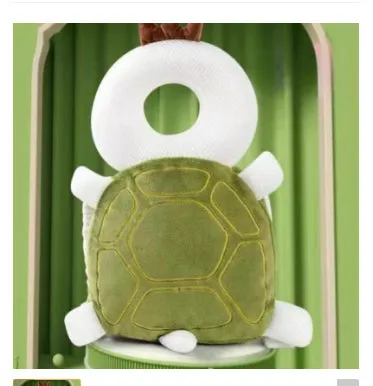
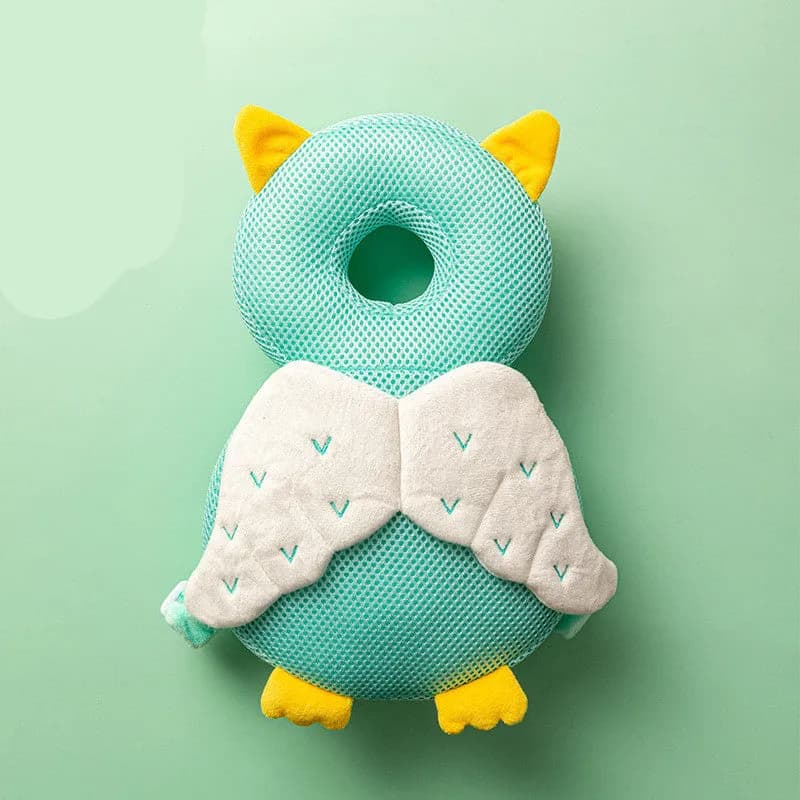
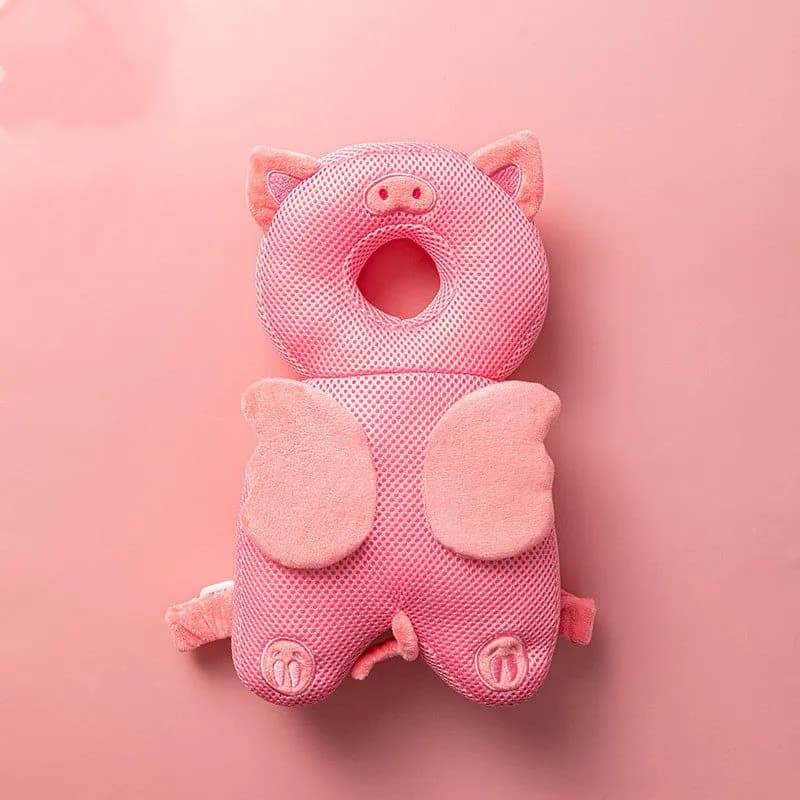
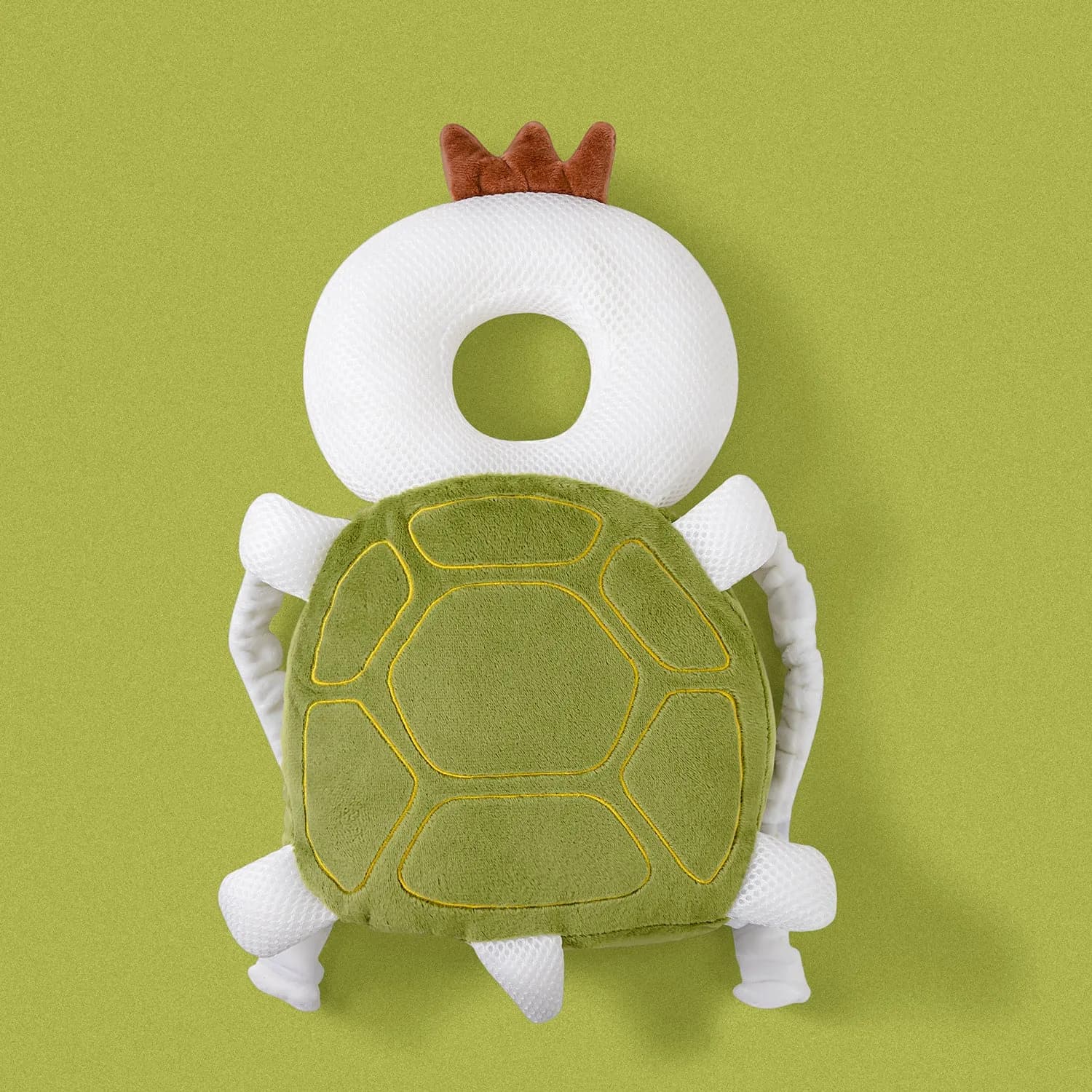
That's the entire idea behind our head protector backpack — 190 grams of breathable 3D mesh sitting between the shoulder blades, catching the exact fall pattern this stage produces, without slowing a single crawl.

Crawl & Cuddle
A soft head & back cushion for exactly this stage
190 g, breathable 3D mesh, adjustable from 5 to 24 months — built around the backward-fall pattern this article covers.
Shop all ten stylesFrequently asked questions
Is it normal for a baby's head bump to swell up quickly?
Yes. Babies have less bone and more soft tissue over the skull than adults, so even minor bumps — especially on the forehead — can raise a visible 'goose egg' within minutes. Fast swelling alone isn't a red flag; how the baby behaves afterward is what matters.
Should I wake my baby up to check on them after a head bump?
For a genuinely minor bump with normal behavior before bedtime, most pediatricians say it's not required. If you're uneasy, waking them once during the first few hours of sleep to confirm they respond normally is a reasonable middle ground.
How long should I watch my baby after a fall?
The standard guidance is to watch closely for the following 24 hours, with the first 2 hours being the highest-attention window for any of the warning signs listed above.
Can a head protector backpack actually prevent bumps?
It won't prevent every stumble, but it changes the outcome of the most common one — the backward tip during crawling, cruising, and early walking — by cushioning the head and upper back on the way down.