
Most variation in crawling and walking timing is normal. Raise it with your pediatrician if your baby isn't sitting unsupported by 9 months, shows no interest in bearing weight on their legs by 12 months, or isn't walking (or showing strong pre-walking signs like cruising) by 18 months.
Why timing varies so much — and why that's mostly fine
Motor milestones follow a wide normal range, not a fixed schedule. Genetics, body proportions, how much supervised floor time a baby gets, and even birth order (older siblings often crawl and walk on a wider range of timelines) all influence when a given baby hits a given milestone. A two-to-three-month spread on either side of an 'average' age is routinely within normal.
Markers worth mentioning at a check-up
Not sitting unsupported by 9 months. No crawling, scooting, or other forward floor mobility by 12 months. No weight-bearing on the legs when held in a standing position by 12 months. No pulling to stand by 12 months. Not walking, and not showing strong pre-walking signs (confident cruising, standing unsupported), by 18 months. Any regression — losing a previously achieved motor skill — at any age.
What's usually not a concern in isolation
Skipping crawling entirely, a wide or wobbly early walking gait, frequent falls during any single developmental stage, or one milestone arriving 4–6 weeks 'late' while everything else tracks normally — all common, all generally fine on their own. Context matters more than any single data point.
How pediatricians typically approach this
At well-child visits, your pediatrician is already tracking gross motor milestones as part of routine screening — this isn't something you need to diagnose yourself in isolation. If something feels off between visits, a phone call or portal message describing specifically what you're seeing (not just 'he's behind') gets a more useful response than waiting for the next scheduled visit.
Early intervention, if it comes to that
If your pediatrician does recommend a closer look, early intervention services for motor delays are widely available, generally low-stakes to access, and — when needed — most effective when started early rather than after a 'wait and see' approach runs long. Raising a concern early is never the wrong call.

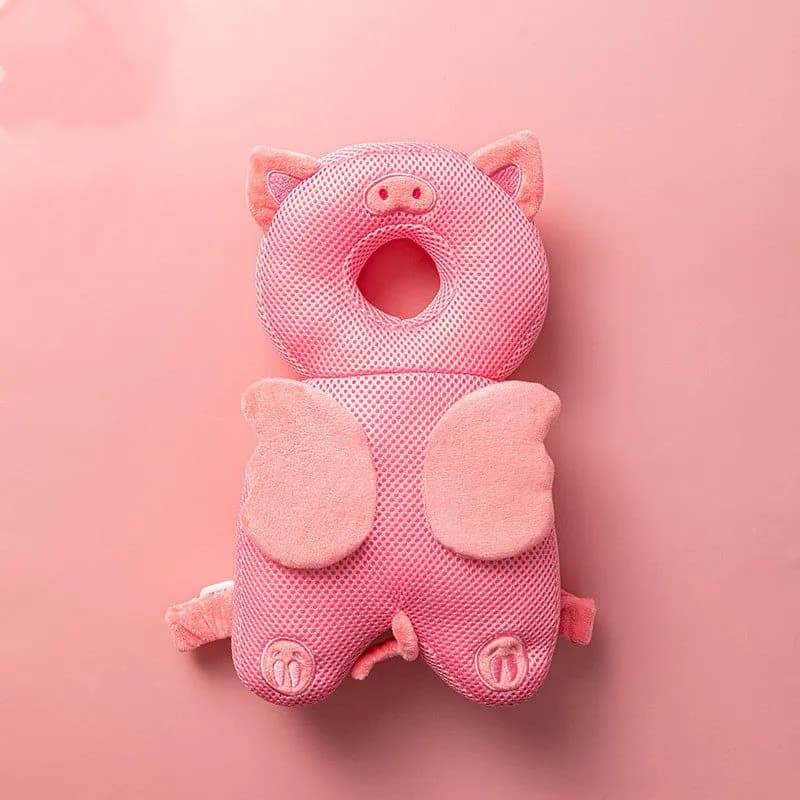
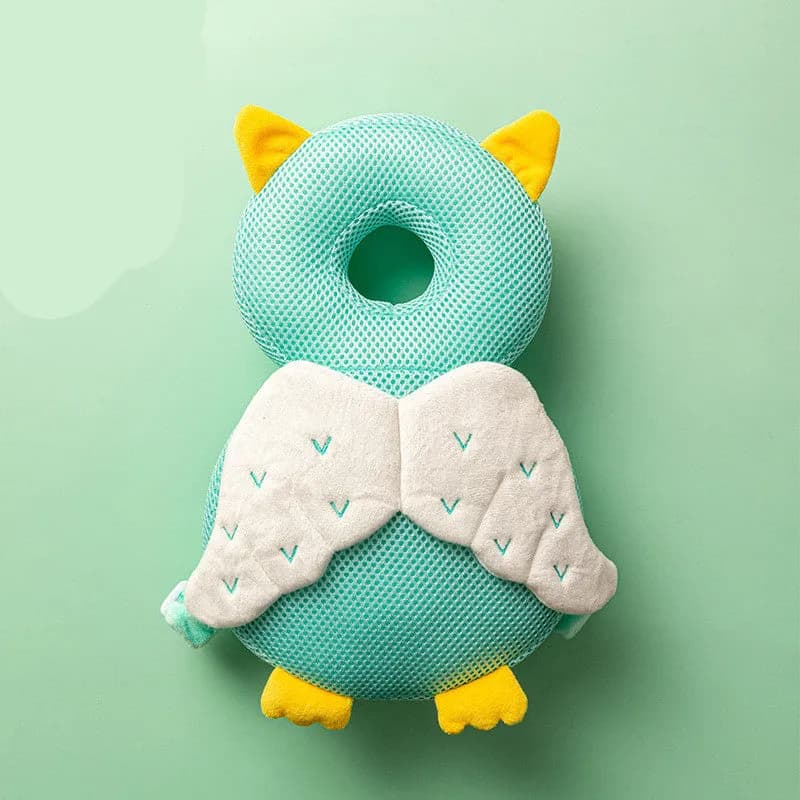
Crawl & Cuddle
A soft head & back cushion for exactly this stage
190 g, breathable 3D mesh, adjustable from 5 to 24 months — built around the backward-fall pattern this article covers.
Shop all ten stylesFrequently asked questions
Is it normal for babies to reach milestones at different times?
Yes, a two-to-three-month spread around typical ages is routinely normal, influenced by genetics, practice time, and individual development pace.
At what age should I be concerned if my baby isn't walking?
18 months is the general marker to raise it with your pediatrician, especially if other pre-walking signs like cruising and standing unsupported aren't present either.
Should I worry if my baby skipped crawling?
Generally no — skipping crawling and moving straight to cruising and walking is a recognized, normal variation as long as other gross motor milestones are on track.