

Toddlers fall backward because their head and torso develop balance and coordination before their protective reflexes (the instinct to catch themselves or turn while falling) mature. This backward-tip stage typically starts around 5–8 months (sitting) and tapers off between 18–24 months as core strength, ankle stability and the righting reflex catch up.
The balance-before-reflex gap
There are two separate systems at play when a baby stands or takes a step: the vestibular and muscular systems that keep them upright, and the protective (parachute and righting) reflexes that kick in when balance fails. The first develops faster. A baby can pull to stand, cruise along the sofa, and even take a step well before the automatic 'catch myself' reflex is reliable — which is precisely why the fall pattern for this age group is so consistently backward and unbraced.
It's worth saying plainly: this isn't clumsiness, and it isn't something to 'fix' with more practice. It's a normal sequencing gap in neuromuscular development that every toddler goes through at roughly the same pace.
A rough timeline
5–8 months: sitting unsupported begins, and so does the backward tip when reaching too far forward or getting startled. 8–10 months: crawling is fast and confident, but stopping short or sitting back from a crawl position produces frequent backward plops. 10–13 months: pulling to stand on furniture — overbalancing backward off the sofa or coffee table is the single most common fall of this window. 13–18 months: cruising along furniture with one hand free; falls become more sideways as balance improves, but backward tips are still frequent on uneven or slippery floors. 18–24 months: first independent steps, with the classic three-steps-then-sit-down pattern — many of these landings are backward onto the tailbone and lower back rather than fully forward.
When it stops
Most toddlers age out of frequent backward falls by 22–24 months, once walking is confident enough that the body naturally shifts weight forward and the protective reflexes have matured. Some children — particularly those who walk early, around 9–10 months — may need the extra cushioning for longer simply because they're upright and mobile before their reflexes are ready.
If backward falls are still frequent well past 26–28 months, or accompanied by frequent stumbling in general, it's worth mentioning at the next pediatric visit — not because it's usually a problem, but because early input from a pediatrician rules out the rare cases where it is.
What actually helps during this stage
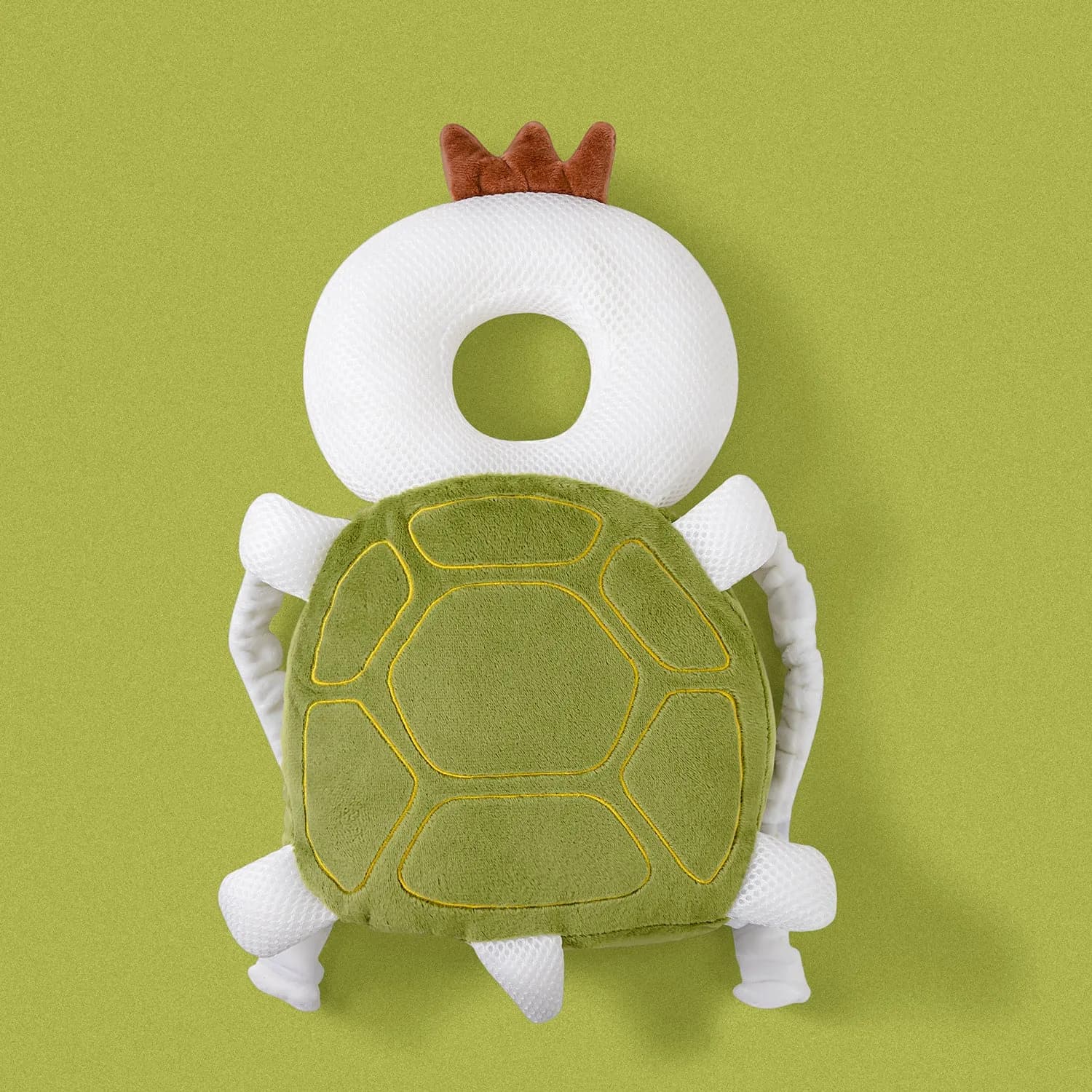
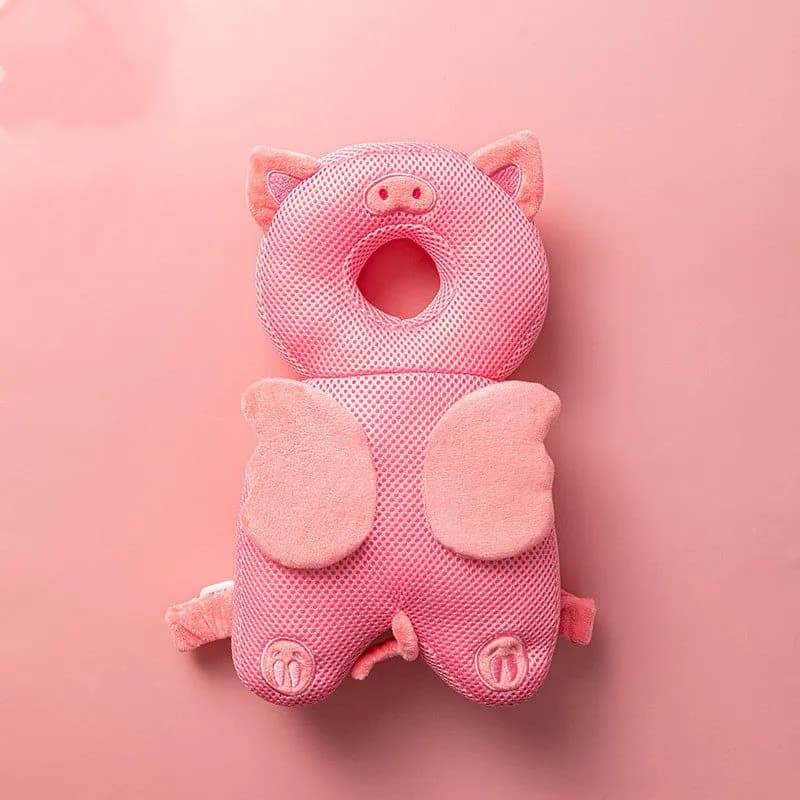
Soft flooring in the rooms where your child spends the most upright time, furniture anchored so it can't tip if they use it to pull up, corners padded at head height, and a lightweight head-and-back cushion for the specific backward-tip pattern this stage produces. None of these should restrict movement — the goal is to let the exploring continue at full speed while changing what the landing feels like.

Crawl & Cuddle
A soft head & back cushion for exactly this stage
190 g, breathable 3D mesh, adjustable from 5 to 24 months — built around the backward-fall pattern this article covers.
Shop all ten stylesFrequently asked questions
At what age do babies stop falling backward so much?
Most toddlers see a sharp drop-off in backward falls between 18 and 24 months, as walking becomes confident and protective reflexes mature.
Is it bad if my baby falls backward a lot while learning to walk?
No — it's the expected pattern for this developmental stage. What matters is the landing surface and whether the head is protected, not the frequency of the falls themselves.
Do early walkers fall more than babies who walk later?
Often, yes, simply because they're upright and mobile before their protective reflexes have fully matured, which can mean a longer window of backward tips relative to babies who start walking closer to 14–15 months.