
Signs a baby is close to walking include cruising confidently along furniture with one hand, standing unsupported for several seconds, taking a step or two before sitting down, and pulling to stand without help. Most babies walk independently between 9 and 18 months, with 12–14 months being the most common range.
The 8 signs, in the order they usually appear
1) Pulling to stand from sitting without help. 2) Standing unsupported for a few seconds at a time. 3) Cruising along furniture, first with two hands, then one. 4) Cruising around corners — moving from one piece of furniture to another. 5) Standing without holding anything for 10+ seconds. 6) Taking a single step between two supports (like between your hands). 7) Squatting to pick something up and standing back up unaided. 8) Taking two or three independent steps before sitting or falling.
Not every baby hits these in strict order, and the gap between the first sign and full independent walking varies widely — anywhere from a few weeks to a few months.
The typical age range
Most babies take independent steps between 9 and 18 months, with the average landing around 12 months. Walking before 10 months or after 18 months without other developmental concerns is usually still within the normal range — pediatricians generally only flag walking delay in isolation if a baby isn't walking by 18 months alongside other milestones being on track.
Preparing your home for this window
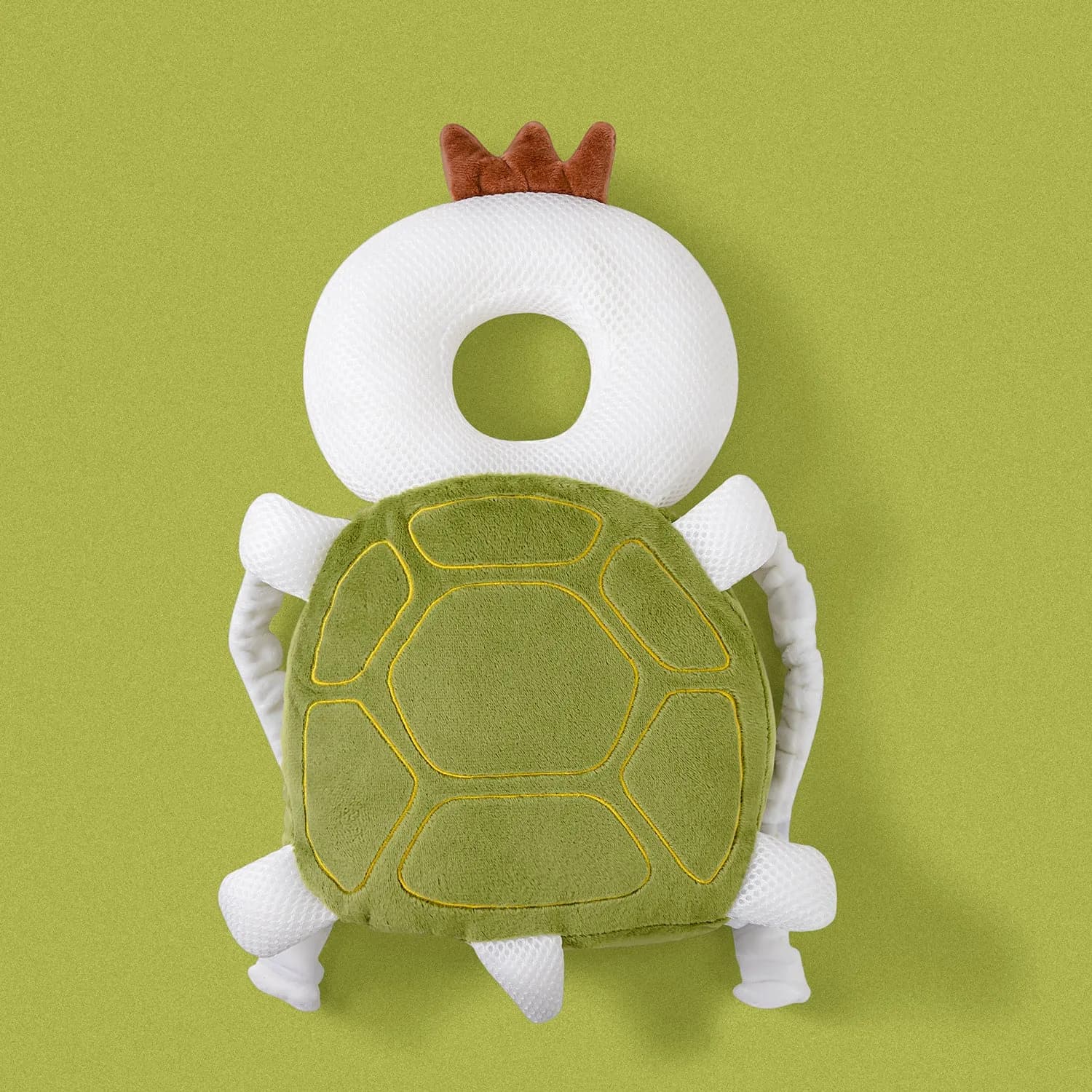
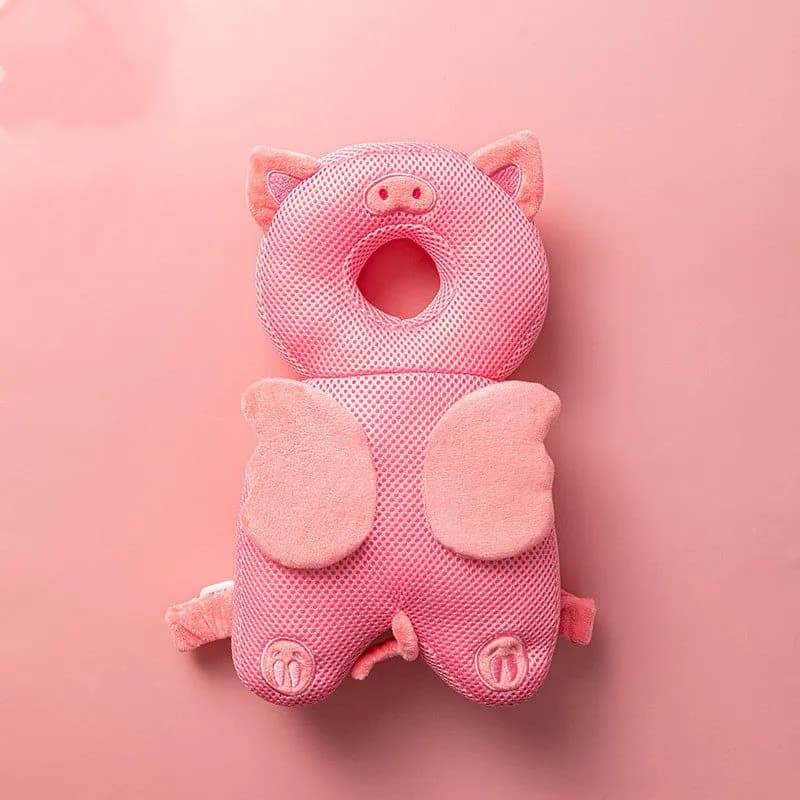
The weeks right before and after first independent steps are the highest-frequency fall window of the entire first two years — a new walker falls constantly, because walking itself hasn't stabilized yet. This is the moment to make sure furniture is anchored, corners are guarded, hard floors near the main walking path are padded where practical, and a lightweight head-and-back cushion is in daily rotation for the inevitable three-steps-then-topple pattern.
Shoes aren't necessary indoors — bare feet or grippy-sole socks give better proprioceptive feedback and traction than a hard-soled shoe while balance is still developing.
What not to worry about
A wide, wobbly gait, arms held up for balance, and frequent sitting-down 'falls' are all completely normal for the first weeks of walking — not signs of a problem, just signs the skill is brand new. It typically smooths out within 4–8 weeks of consistent practice.

Crawl & Cuddle
A soft head & back cushion for exactly this stage
190 g, breathable 3D mesh, adjustable from 5 to 24 months — built around the backward-fall pattern this article covers.
Shop all ten stylesFrequently asked questions
What age do most babies start walking?
The average is around 12 months, with a normal range of 9 to 18 months.
Should I worry if my baby isn't walking by 15 months?
Generally no, as long as other milestones (cruising, standing, pulling to stand) are progressing. If walking hasn't started by 18 months, mention it at your next pediatric visit.
Do baby shoes help with learning to walk?
Most pediatric guidance favors bare feet or non-slip socks indoors during this stage — they give better balance feedback than a stiff-soled shoe.
Why do new walkers fall so much?
Walking is a genuinely new, complex motor skill — balance, weight-shifting and stepping all have to sync up in real time. Frequent falls in the first weeks are expected and resolve as the pattern becomes automatic.