
Common baby safety myths include: walkers (the wheeled kind) help babies learn to walk faster (they don't, and are linked to injuries), a bump that doesn't bruise is automatically fine (behavior matters more than bruising), and carpet fully protects against fall injuries (it reduces but doesn't eliminate risk).
Myth 1: Baby walkers (wheeled) help babies walk sooner
The evidence points the other way — wheeled baby walkers are associated with delayed walking in some studies, likely because they let a baby move without developing the balance and leg strength that independent walking requires. They're also linked to a significant number of fall and stair injuries. Most pediatric safety organizations recommend against them.
Myth 2: If there's no bruise, the bump wasn't serious
Bruising is a poor indicator of severity on its own. Behavior after the fall — alertness, normal feeding, no vomiting, no excessive drowsiness — is a far more reliable signal than whether a bruise appears, especially since some of the more serious warning signs (internal, rather than surface, injury) don't bruise visibly at all.
Myth 3: Carpet makes falls basically safe
Carpet reduces impact compared to hardwood or tile, but it doesn't eliminate fall risk — a hard enough backward tip onto carpet over a concrete subfloor can still produce a significant bump. Carpet is a risk-reducer, not a safety guarantee.
Myth 4: Early walking means a more advanced baby
Walking age within the normal range (9–18 months) has no established correlation with later cognitive or physical development. It's primarily a function of individual neuromuscular timing, body proportions, and how much floor-time practice a baby gets — not an indicator of general development speed.
Myth 5: You should always wake a baby to check on them after any bump
For a clearly minor bump with normal behavior, most pediric guidance doesn't require waking a sleeping baby repeatedly through the night — normal, undisturbed sleep is itself a reassuring sign. Waking once during the first couple hours after a more significant bump is a reasonable middle ground, not an all-night vigil.
Myth 6: Soft flooring alone is enough baby proofing
Floor padding addresses one risk (impact softness) but not others — furniture tip-overs, sharp corners, stairs, and cords all need separate attention. A comprehensive approach layers several measures rather than relying on any single one.
Myth 7: A baby who falls a lot has bad balance
Frequent falling during the crawling-to-walking window is the expected pattern, not a sign of poor coordination. Balance and protective reflexes develop on a predictable timeline that all babies go through at roughly the same relative pace, regardless of how many falls happen along the way.

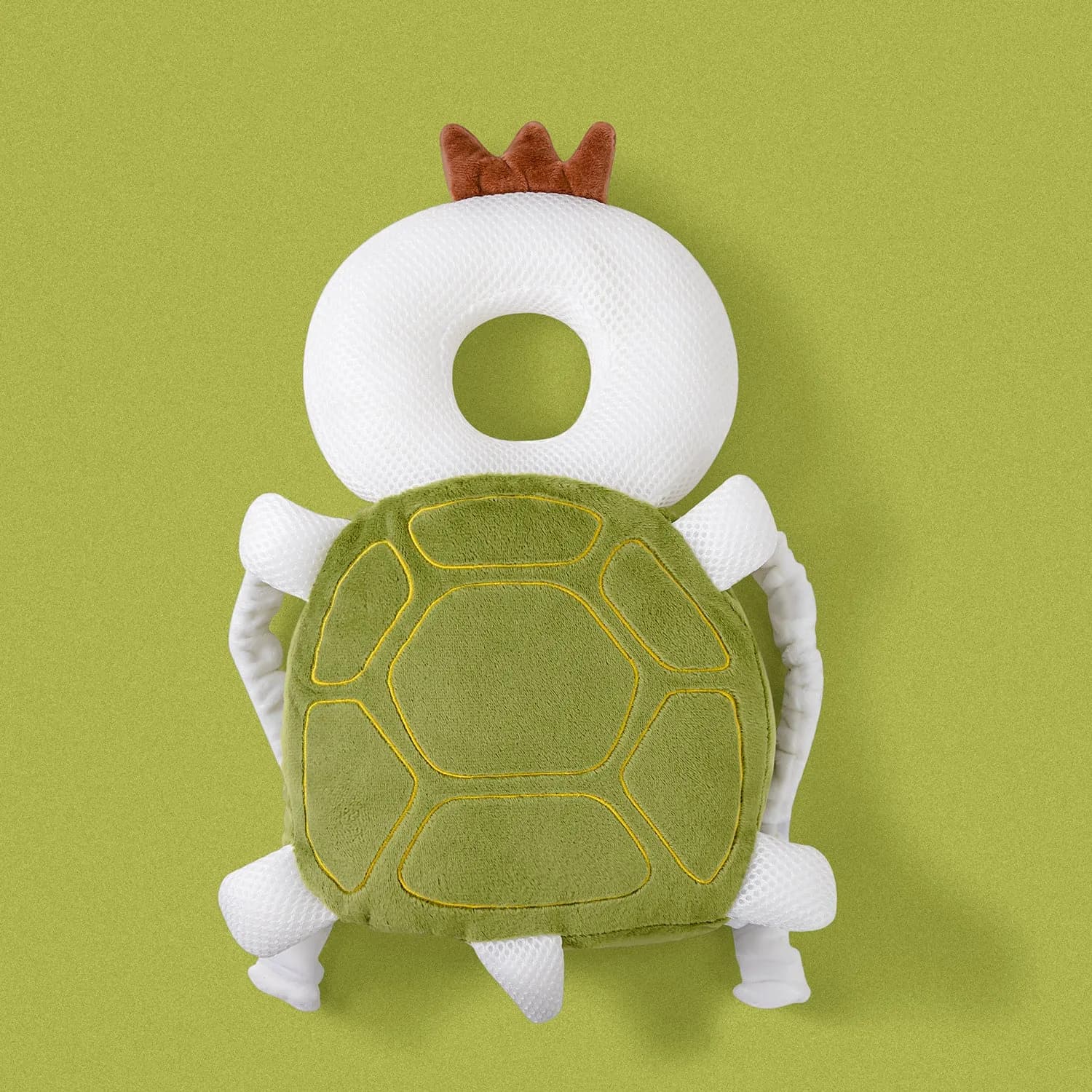
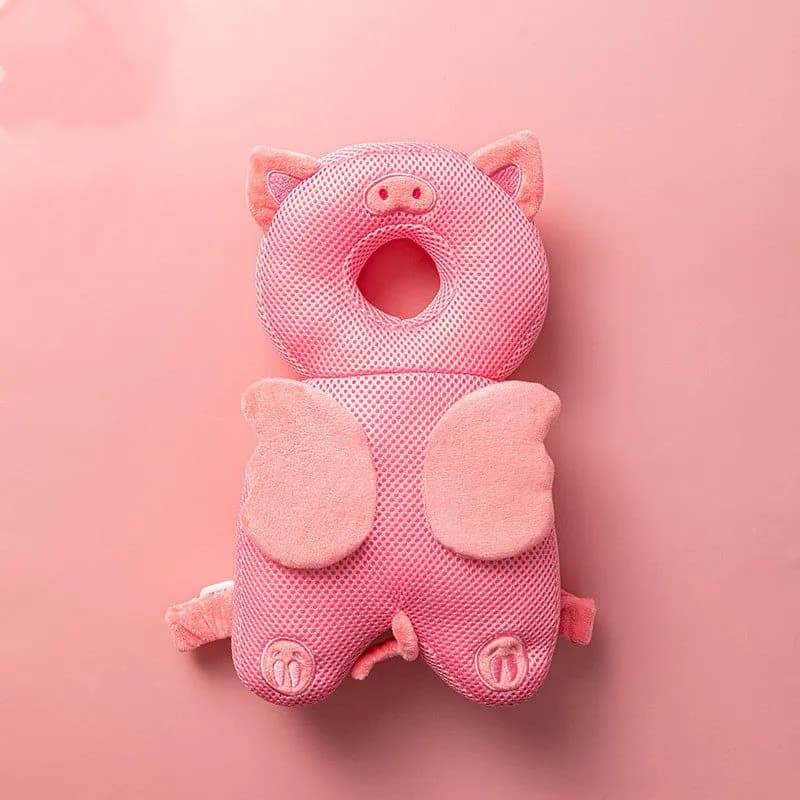
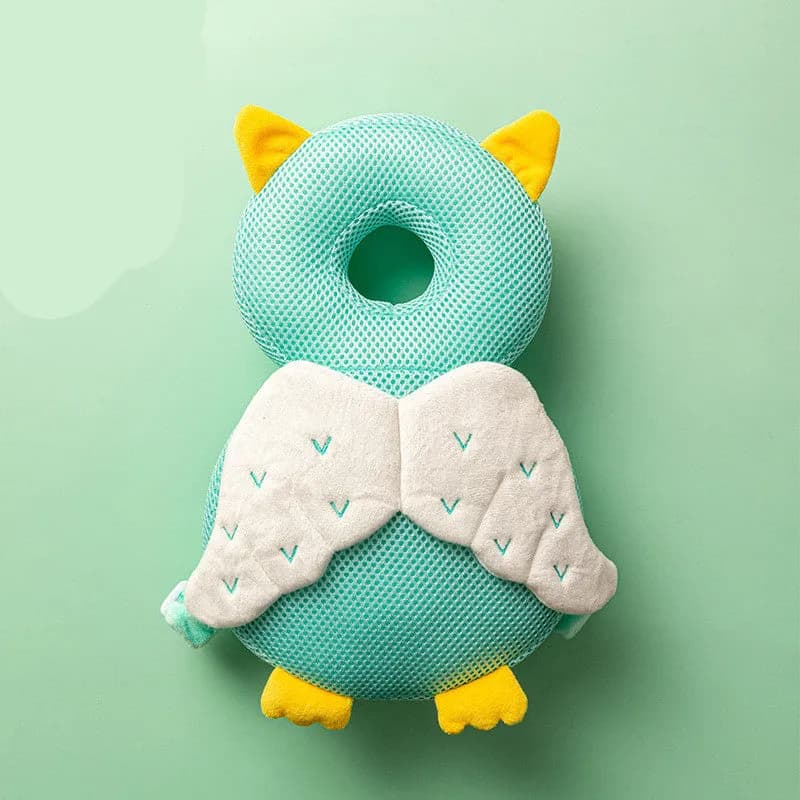
Crawl & Cuddle
A soft head & back cushion for exactly this stage
190 g, breathable 3D mesh, adjustable from 5 to 24 months — built around the backward-fall pattern this article covers.
Shop all ten stylesFrequently asked questions
Are wheeled baby walkers safe?
Most pediatric safety organizations recommend against them due to injury risk and no evidence they speed up walking — stationary activity centers are a safer alternative.
Does a bruise mean a head bump was serious?
Not necessarily. Behavior after the fall (alertness, feeding, no vomiting or excessive drowsiness) is a better indicator than whether bruising appears.
Is carpet enough to protect against fall injuries?
It helps, but doesn't fully eliminate the risk of a hard impact, especially over a concrete subfloor or on thin carpeting.