
Corner guards matter most on furniture at standing-toddler head height with hard, sharp corners — coffee tables, hearth edges, and low bookshelf corners. Round-edged or soft furniture, and anything above a toddler's reach or head height, generally doesn't need one.
Why height matters more than the furniture type
A sharp corner is only genuinely risky where it intersects with the height a toddler's head is likely to be during a fall — roughly 16 to 24 inches off the ground for a standing or cruising 10–18 month old. A coffee table corner sits almost exactly in that zone; a dining table corner, at adult hip height, usually doesn't (though a toddler bumping a forehead while standing next to one is still possible).
Priority list
1) Coffee tables — the single highest-priority item, given the combination of low height, hard material (often glass or solid wood) and proximity to where toddlers play and pull to stand. 2) Fireplace hearths — stone or brick edges at exactly the wrong height, worth a padded hearth guard rather than just corner guards. 3) Low bookshelves and TV stands with sharp corners. 4) Kitchen island or counter corners where a toddler might run into them at a sprint rather than a stumble.
What you can reasonably skip
Rounded or beveled furniture edges, furniture with corners above toddler head height, and soft-edged furniture (upholstered ottomans, rounded side tables) generally don't need guards. Over-guarding every surface in a home can also make a space feel more like a padded cell than a home — reserve guards for genuine higher-risk edges.
Corner guards aren't the whole answer
Even a well-guarded coffee table doesn't protect against every fall pattern — a backward tip while standing near, but not against, the table can still result in a hard landing on the floor rather than an impact with the corner itself. This is where floor padding and a head-and-back cushion complement corner guards rather than duplicate them: guards address impact with furniture, the cushion addresses impact with the floor.

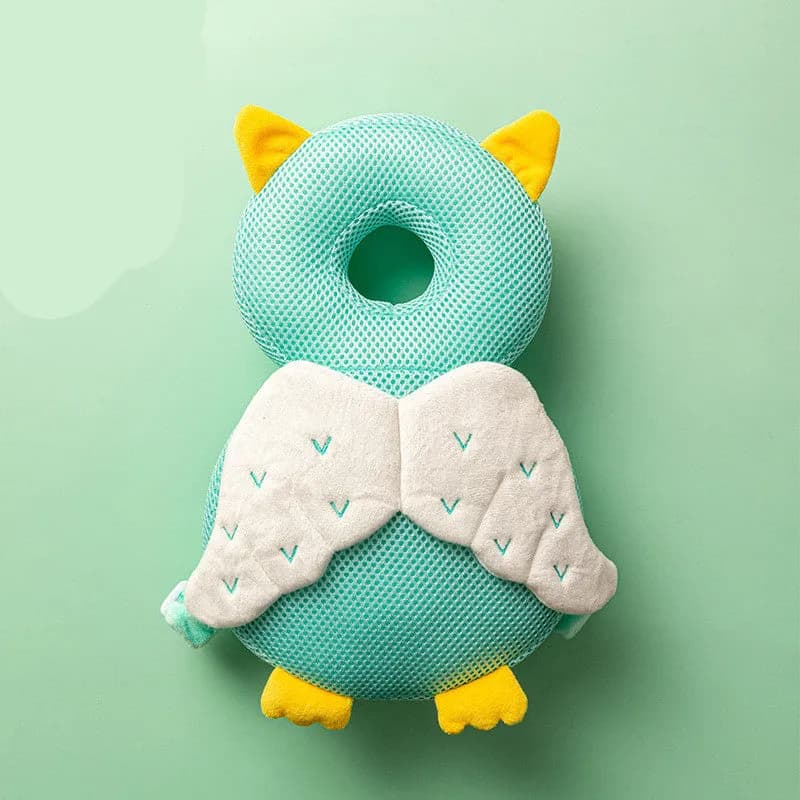
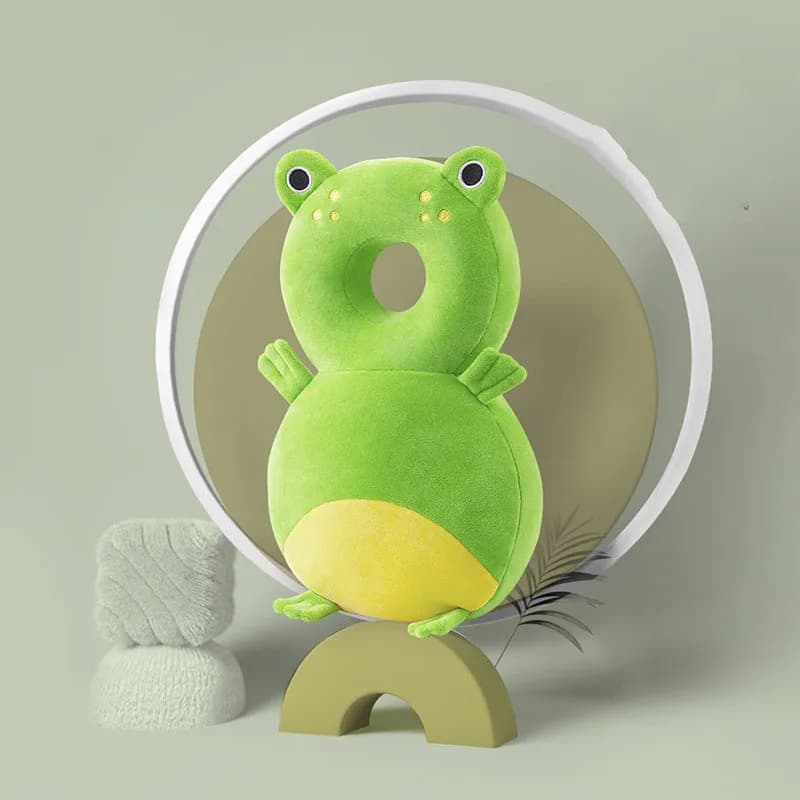
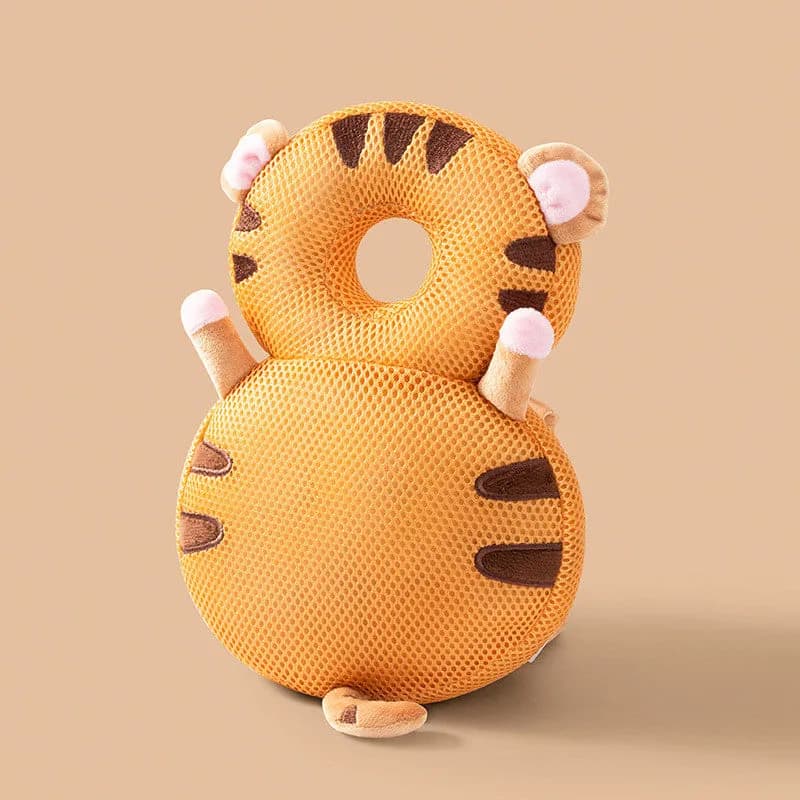
Crawl & Cuddle
A soft head & back cushion for exactly this stage
190 g, breathable 3D mesh, adjustable from 5 to 24 months — built around the backward-fall pattern this article covers.
Shop all ten stylesFrequently asked questions
Do I need corner guards on every piece of furniture?
No — prioritize low, hard-edged furniture at toddler head height, like coffee tables and hearths. Rounded or higher furniture generally doesn't need one.
Are corner guards enough on their own for coffee table safety?
They handle direct impact with the corner, but not a fall onto the open floor near the table. Pairing guards with floor padding or a head-and-back cushion covers both scenarios.
What material corner guard is best?
Dense foam or silicone guards that stay firmly adhered (check the adhesive strength before relying on it) generally outperform thin rubber guards that can be pulled off by a curious toddler.