
Anchor any furniture over 30 inches tall or with drawers a child could climb — dressers, bookshelves, TV stands and freestanding wardrobes — using an L-bracket or safety strap screwed into a wall stud, not just drywall. Do this before your baby is mobile, since a child doesn't need to be strong, just curious and climbing, for a tip-over to happen.
Why furniture tip-overs are a real risk, not a theoretical one
A dresser with a few open drawers becomes a ladder. A baby who has just learned to pull to stand will use whatever's nearby — including furniture never designed to bear that kind of load. Furniture and TV tip-overs send thousands of children to emergency rooms every year, and the age range most affected overlaps almost exactly with the crawling-to-cruising window this entire site is built around.
What to anchor, in priority order
1) TVs and TV stands — mount the TV to the wall where possible; if it must sit on furniture, anchor both the TV and the stand. 2) Dressers and chests of drawers — the classic tip-over risk because drawers invite climbing. 3) Bookshelves — top-heavy once loaded with books or toys. 4) Freestanding wardrobes and armoires. 5) Anything on wheels, including changing tables that aren't bolted or braced.
How to anchor correctly
Use an anti-tip kit (L-brackets and a strap, or a rigid metal strap) rated for the furniture's weight. The anchor point on the wall side must hit a stud — a screw into drywall alone will pull out under load exactly when it matters most. Use a stud finder, mark the stud, and pre-drill. On the furniture side, anchor into a solid structural part of the frame, not just the back panel, which is often thin particleboard.
Test the anchor by firmly pulling the top of the furniture forward once installed — it should not move. Re-check anchors every few months; drywall anchors and even stud-mounted screws can loosen with repeated stress from a climbing toddler.
Beyond anchoring: reducing the incentive to climb
Remove anything tempting from the top of furniture — a TV remote, a toy, a bright object — since that's usually what motivates the climb in the first place. Keep the heaviest items in the bottom drawers to lower the furniture's center of gravity as a second layer of protection behind the anchor itself.
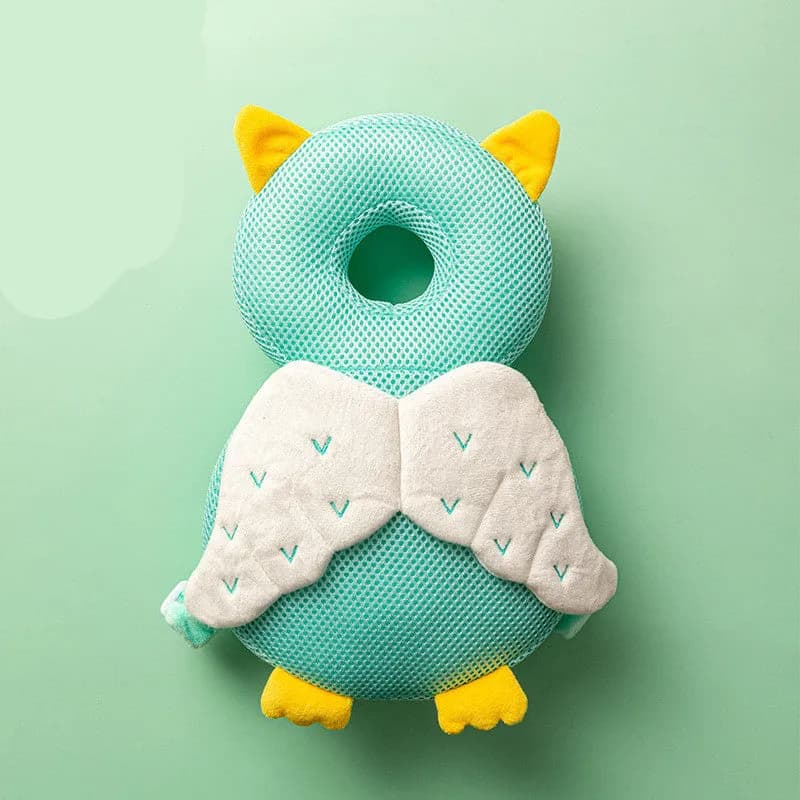
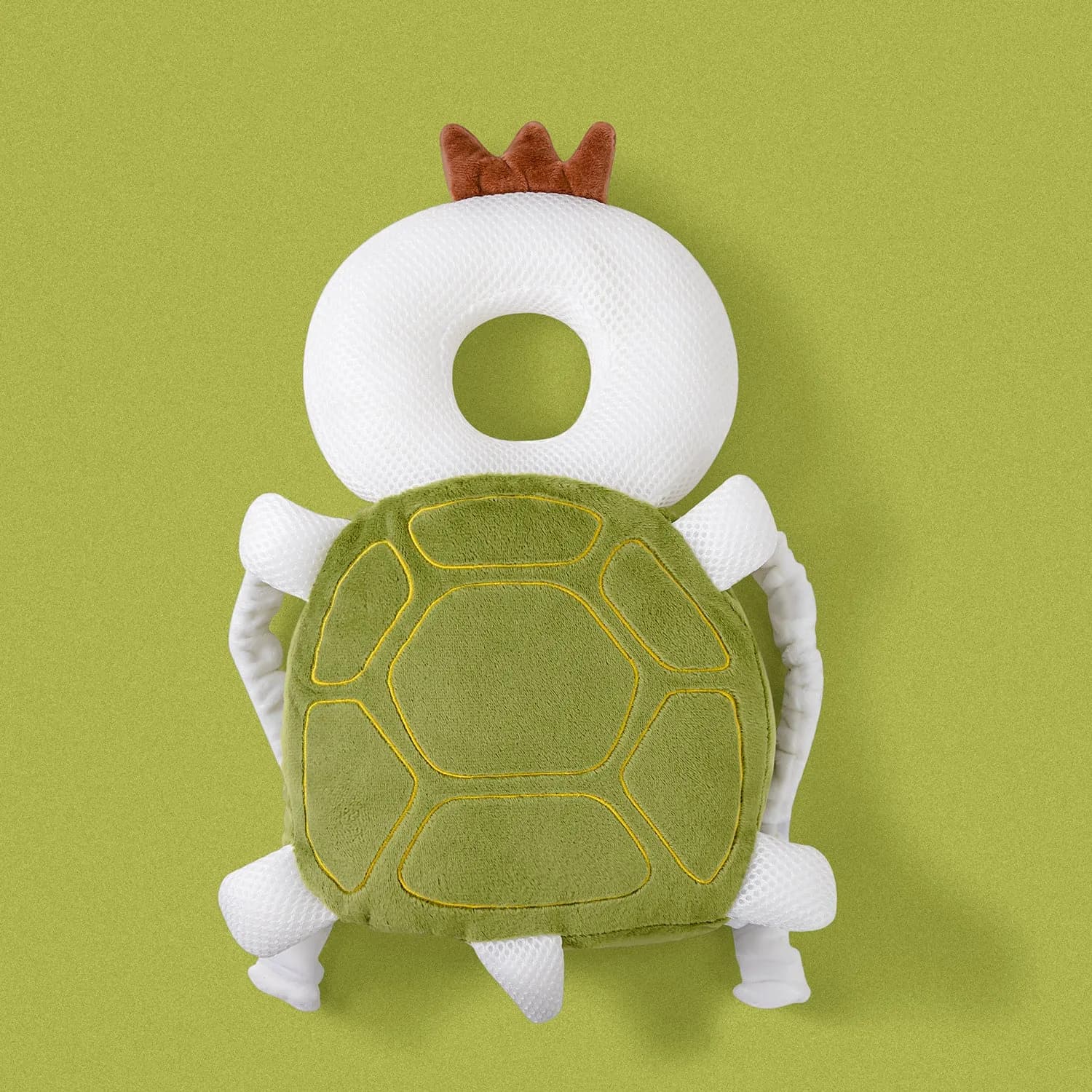
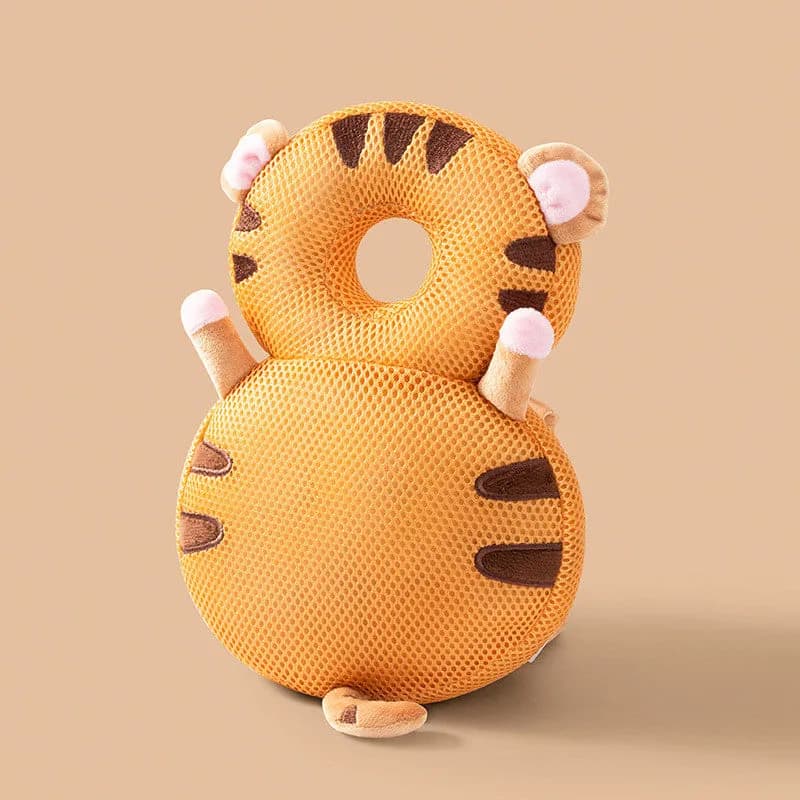
And because even well-anchored furniture doesn't eliminate every backward stumble near it, pair anchoring with a soft head-and-back cushion during active floor time — the anchor stops the furniture from falling on your baby, the cushion softens what happens when your baby falls near the furniture.

Crawl & Cuddle
A soft head & back cushion for exactly this stage
190 g, breathable 3D mesh, adjustable from 5 to 24 months — built around the backward-fall pattern this article covers.
Shop all ten stylesFrequently asked questions
At what age should I anchor furniture?
Before your baby is mobile — ideally before 5 months. Anchoring after a baby is already crawling or pulling to stand means doing it under time pressure, which is when corners get cut.
Can I use drywall anchors instead of finding a stud?
Only as a last resort, and only with anchors specifically rated for the furniture's weight. A stud-mounted screw is significantly stronger and is the standard recommendation whenever a stud is within reach of the mounting point.
Do I need to anchor furniture in rooms my baby doesn't usually enter?
Yes, for anything easily accessible — babies and toddlers move faster and further than parents expect once they're cruising. A five-minute unsupervised gap is enough to reach an unanchored dresser in an adjoining room.