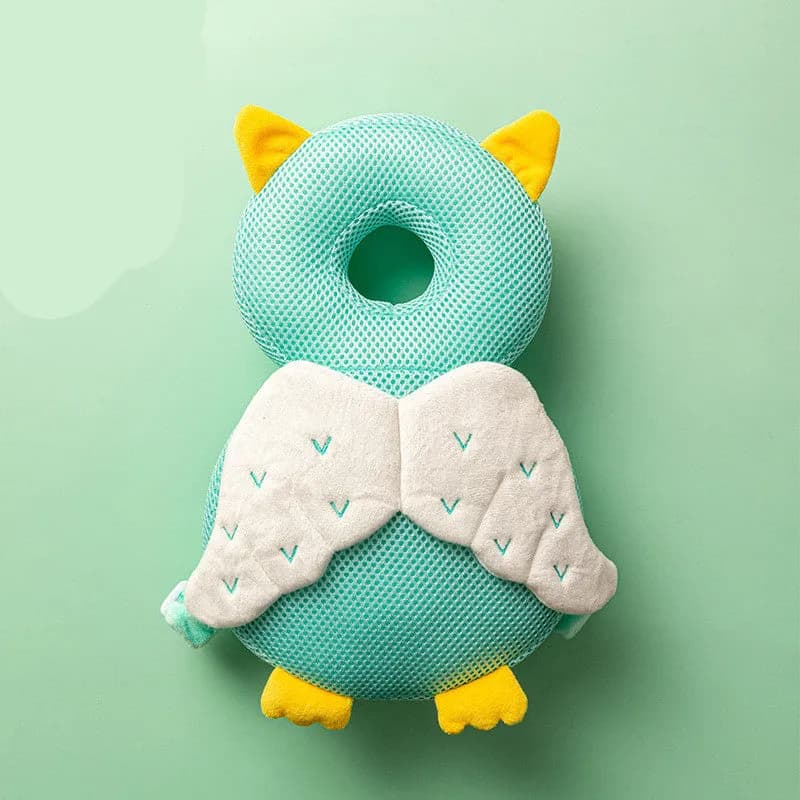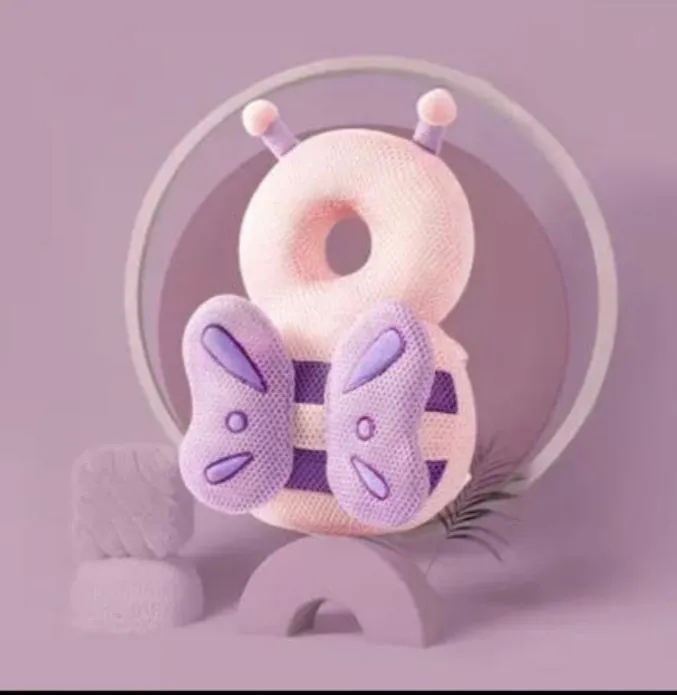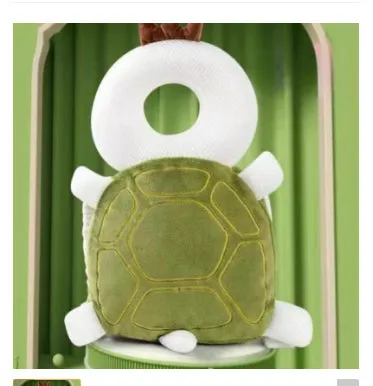

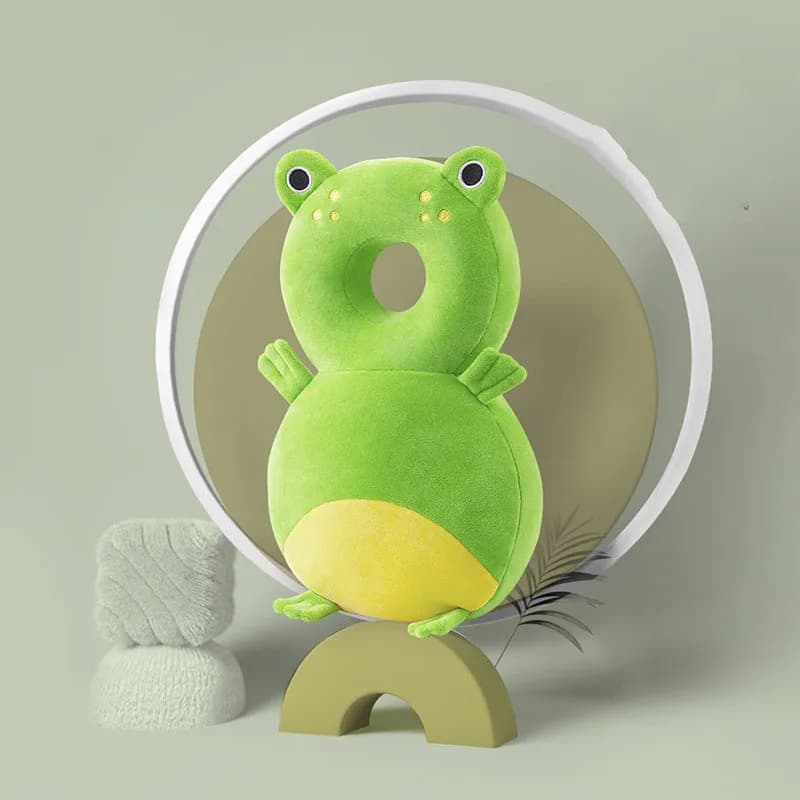
Hardwood and tile floors don't need to be fully covered to be safe — focus padding on the specific zones where a baby stands, pulls up, or cruises (near the sofa, coffee table, and open floor space), and pair that with a soft head-and-back cushion for backward falls that happen anywhere else in the house, including rooms without a mat.
Why hardwood and tile change the calculus
Carpet forgives a lot of wobbles that hardwood and tile don't. The same backward tip that ends in a soft thump on carpet can produce a sharp, fast impact on hardwood — no give in the surface, no cushioning underfoot. Homes with open-plan hardwood living areas (very common in newer builds) are exactly the layout where a mobile baby spends the most unsupervised-adjacent time on the hardest surface in the house.
You don't need to cover every square foot
Full-room foam tile flooring works but isn't realistic or desirable for most living spaces long-term. A more sustainable approach: place a large, low-pile play rug or interlocking foam mat in the primary play zone — near the sofa and coffee table, where pulling-to-stand happens most — and accept that your baby will still spend time crawling and cruising on bare hardwood elsewhere in the house.
That's the gap a wearable head-and-back cushion closes. It travels with the baby instead of staying fixed to one rug, so the protection is there in the kitchen doorway, the hallway, or grandma's uncarpeted living room — anywhere the backward tip happens to land.
Other hardwood-specific risks worth addressing
Socks and hardwood are a slip risk once walking starts — grippy-sole socks or bare feet both outperform smooth socks on polished floors. Area rugs need non-slip backing or they become a trip hazard rather than a safety feature. And hardwood transitions (a threshold strip between rooms) are a common stumble point for new walkers — keep an eye on those specifically during the first months of independent walking.

Crawl & Cuddle
A soft head & back cushion for exactly this stage
190 g, breathable 3D mesh, adjustable from 5 to 24 months — built around the backward-fall pattern this article covers.
Shop all ten stylesFrequently asked questions
Is hardwood flooring dangerous for a crawling baby?
Not inherently, but it removes the cushioning that carpet provides during the backward-fall stage of development, which is why targeted padding and a wearable cushion are worth considering in hardwood-heavy homes.
What's better for baby safety — a play mat or a wearable head protector?
They cover different gaps. A play mat protects one fixed zone; a wearable head-and-back protector protects the baby wherever they go, including rooms and moments a mat doesn't reach.
Are foam floor tiles safe long-term?
Yes, and many parents keep them down through the toddler years, though some prefer to transition to a low-pile rug once walking is confident, around 18–24 months.