
Beyond licensing and staff ratios, ask a daycare specifically about floor surfaces in the crawling/toddler room, how furniture is anchored, their fall-incident reporting process, and whether staff are trained to recognize the difference between a minor bump and a head injury that needs immediate attention.
Why crawling-and-walking rooms need extra questions
A licensed daycare has already cleared baseline safety requirements — but the specific risks of the 5–24 month age group (backward falls, furniture tip-overs, hard flooring) aren't always covered by general licensing checklists. This is the age range with the highest fall frequency of early childhood, concentrated in a room with multiple mobile children and a lower staff-to-child ratio than a one-on-one home setting.
Questions to ask about the physical space
What's the flooring in the infant/toddler room — carpet, foam tile, or hardwood? Is furniture in the room anchored, and when was it last checked? Are corners on low tables and shelving guarded? How much open floor space is there per child, and is it enough for a fall to land clear of other furniture or toys?
Questions about staff response
What's the protocol when a child bumps their head — is it documented and communicated to parents the same day, even for minor bumps? Are staff trained in recognizing signs that need a call to a parent versus signs that need immediate medical attention? What's the staff-to-child ratio specifically in the crawling/toddler room, not just the facility average?
What you can control from your side
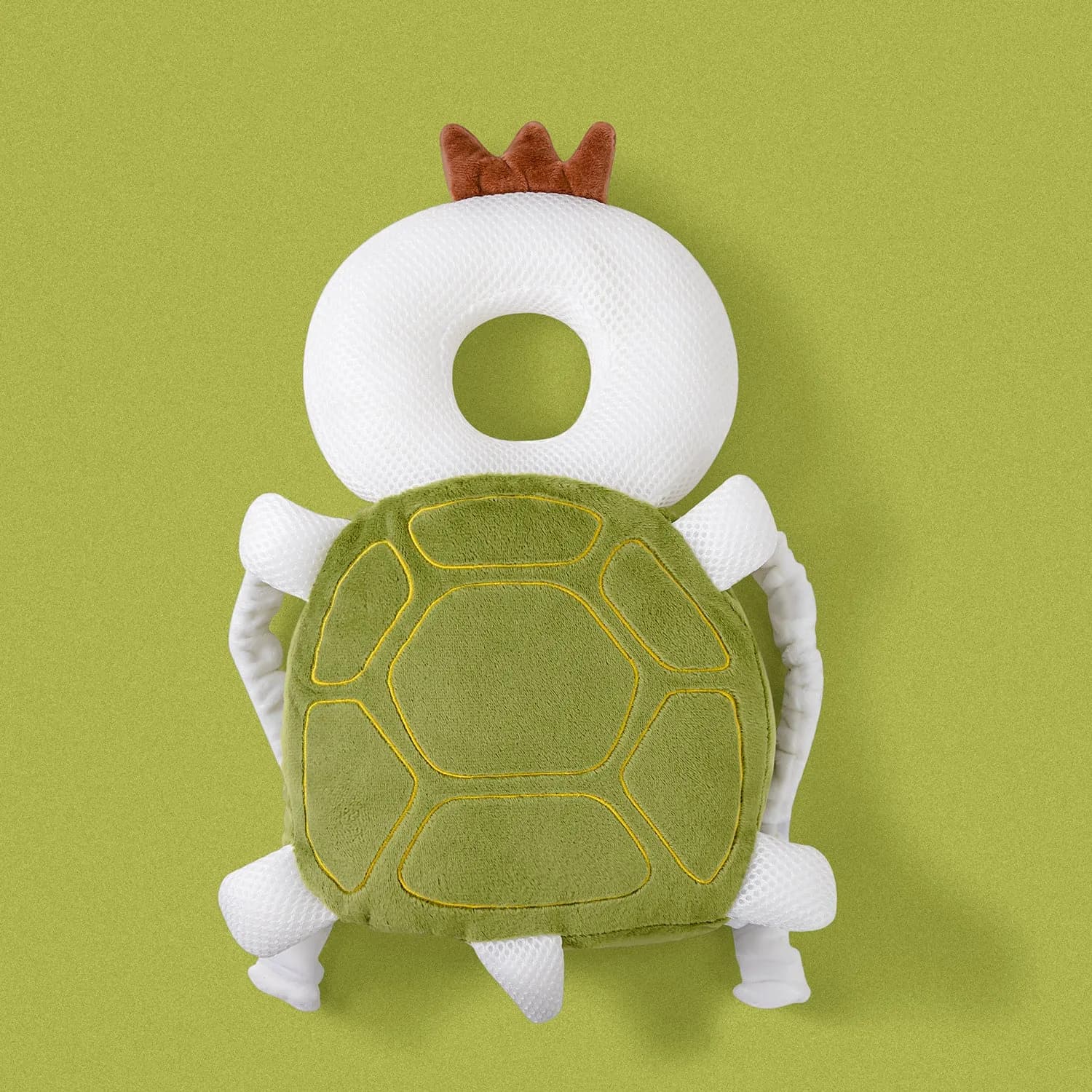
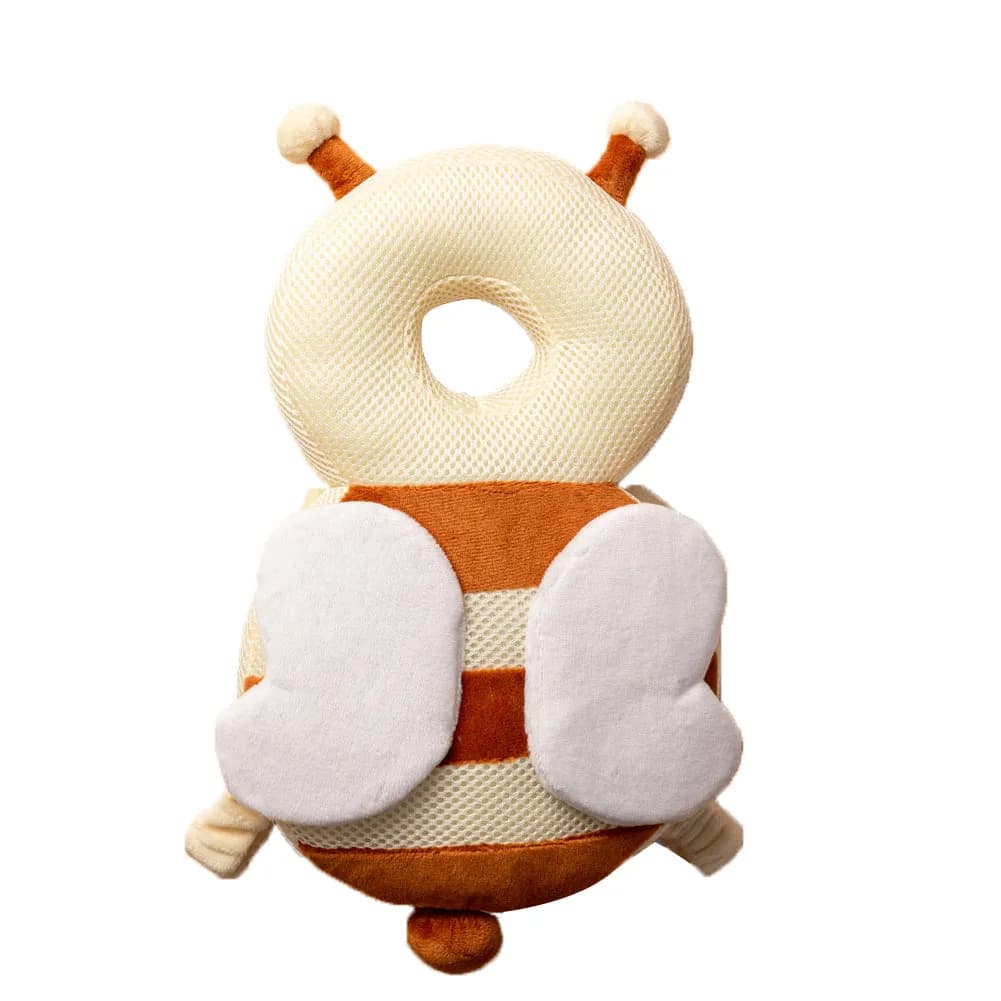
If your daycare allows a personal item to travel with your child, a lightweight head-and-back protector is a reasonable thing to send along for active floor-time hours, especially during the peak fall-frequency window right around first steps. It doesn't replace daycare safety practices — it's a second layer, the same way it functions at home.

Crawl & Cuddle
A soft head & back cushion for exactly this stage
190 g, breathable 3D mesh, adjustable from 5 to 24 months — built around the backward-fall pattern this article covers.
Shop all ten stylesFrequently asked questions
Is it normal for daycares to report every minor bump?
Good daycares typically document and report every head bump, even minor ones, as a matter of liability and communication practice — it's a positive sign, not a red flag, if they do this consistently.
Can I send a head protector backpack with my child to daycare?
Most daycares allow personal comfort and safety items if you provide them — check with your specific facility, but it's a common and reasonable request for the crawling-to-walking age range.
What staff-to-child ratio is considered safe for crawling infants?
Requirements vary by state/region, but many recommend no more than 3–4 infants per caregiver in the crawling age range. Ask your daycare for their specific ratio in that room rather than the facility-wide average.