

The most common first-time-parent safety gaps are baby-proofing too late (after crawling starts, not before), anchoring furniture but forgetting to re-check it as the baby grows heavier and stronger, underestimating how fast a new walker falls, and assuming supervision alone prevents every backward tip-over.
Mistake 1: Waiting until baby is already mobile
It's easy to think 'we'll baby-proof when they start crawling' — but by the time a baby is visibly crawling, they've usually had weeks of scooting and reaching mobility already. Start the floor-level pass around month 4–5, well before crawling is expected, so nothing is a last-minute scramble.
Mistake 2: Anchoring furniture once and forgetting it
An anchor installed at month 5 is under very different stress by month 14, once a baby weighs twice as much and is actively climbing rather than just leaning. Re-check anchor points every few months, especially before and after growth spurts.
Mistake 3: Underestimating new-walker fall frequency
The first few weeks of independent walking produce more falls per hour than almost any other stage — new walkers genuinely fall dozens of times a day while the skill stabilizes. Parents who braced for the crawling stage are sometimes caught off guard by how much more frequent (though usually less severe) the tumbles become once walking starts.
Mistake 4: Assuming supervision replaces environmental safety
Even attentive, in-the-room supervision can't catch every backward tip — reaction time for an adult is measured in a full second or more, and a fall from standing height takes a fraction of that. Supervision and environmental safety (anchored furniture, padded corners, a head-and-back cushion) work together; neither replaces the other.
Mistake 5: Only baby-proofing the nursery
A mobile baby doesn't stay in the nursery. The living room, kitchen doorway and hallway usually see more crawling and cruising time than the nursery itself — baby-proof based on where your baby actually spends time, not where they sleep.
Mistake 6: Choosing style over substance in safety gear
It's tempting to pick baby gear on looks alone, but weight, breathability and coverage matter more for anything worn during active play — a heavy or poorly ventilated head protector can be worse than none at all if a baby refuses to keep it on.
Mistake 7: Not baby-proofing other people's houses
Grandparents' and friends' homes are often the least baby-proofed spaces your child regularly visits. A quick mental scan on arrival — same as a hotel room — closes this gap in a few minutes.
Mistake 8: Treating every bump as an emergency (or the reverse)
Both overreacting to every minor bump and underreacting to genuine warning signs are common first-time-parent patterns. Knowing the specific signs that warrant a call to the pediatrician (see our head bump guide) resolves this uncertainty ahead of time, rather than in the panic of the moment.

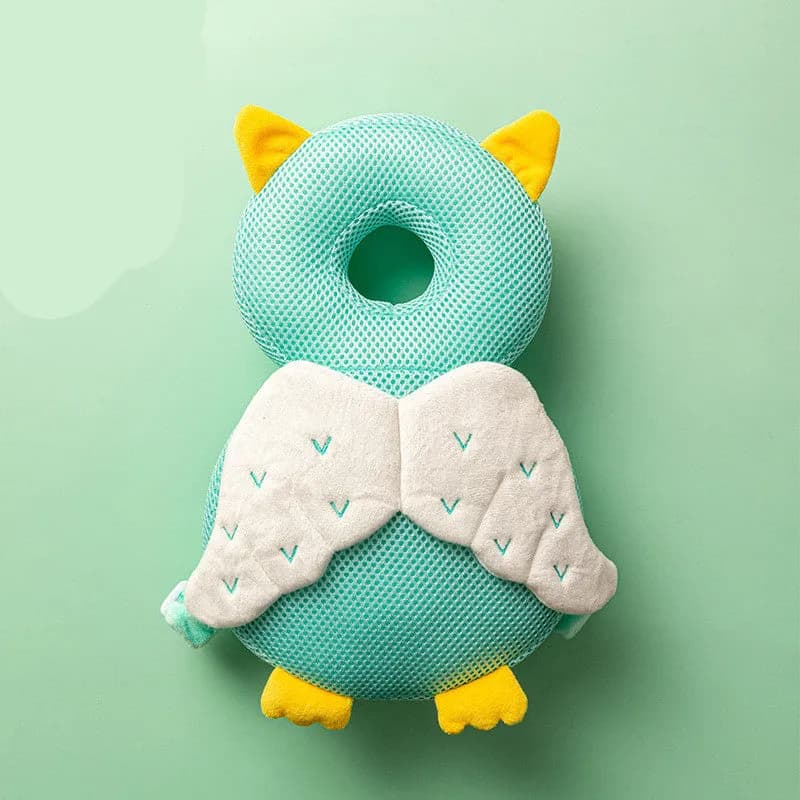
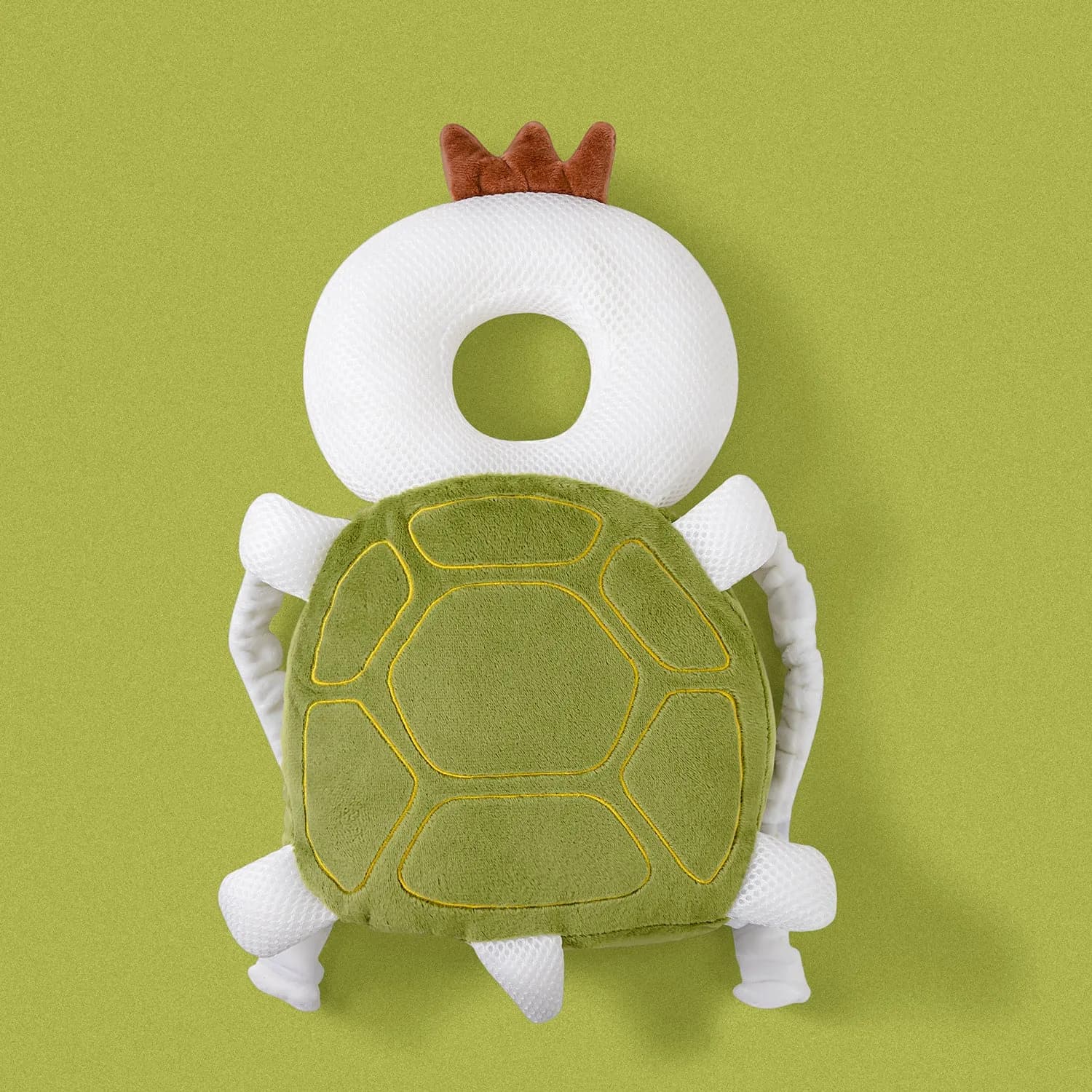
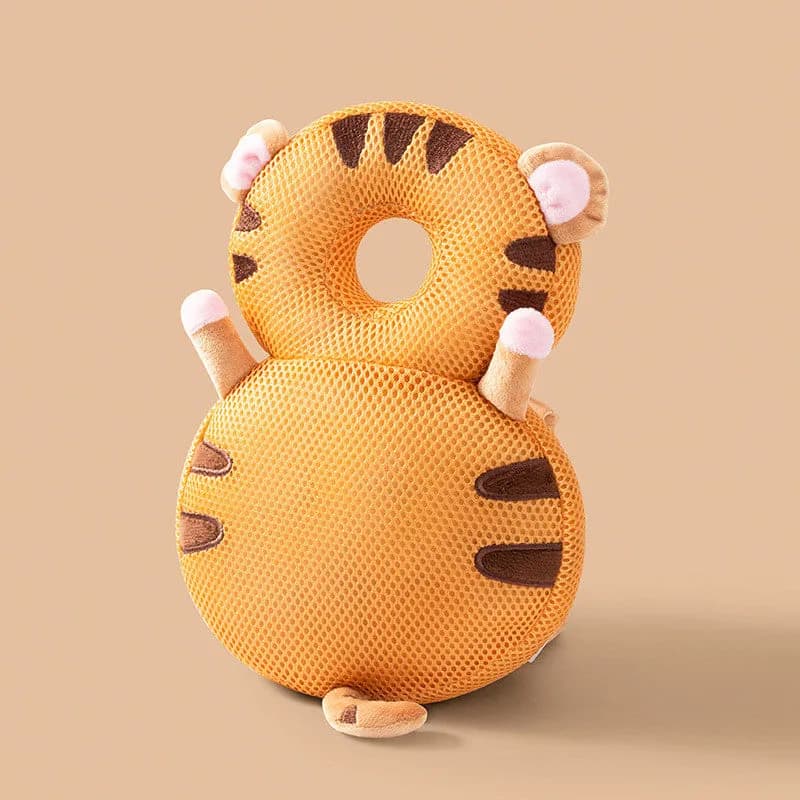
Crawl & Cuddle
A soft head & back cushion for exactly this stage
190 g, breathable 3D mesh, adjustable from 5 to 24 months — built around the backward-fall pattern this article covers.
Shop all ten stylesFrequently asked questions
When should baby proofing actually start?
Around 4–5 months, ahead of typical crawling onset, rather than reactively once a baby is already mobile.
How often should furniture anchors be re-checked?
Every few months, and especially after a growth spurt or once a baby starts climbing rather than just leaning on furniture.
Does supervision alone keep a baby safe from falls?
Supervision reduces risk significantly but can't replace environmental safety measures — adult reaction time is slower than the speed of a backward tip-over from standing height.