

Pulling to stand, typically starting between 8 and 10 months, is the single most fall-prone motor milestone because babies gain the strength to pull upright before they gain the balance to stay there or the reflex to catch a backward fall — resulting in frequent, sudden backward tips off furniture.
Why this stage specifically is so fall-heavy
Pulling to stand requires upper-body and leg strength that develops relatively quickly through the crawling months. Balance while standing, and the reflex to catch a fall once standing, both lag behind. The result is a baby who can confidently haul themselves upright on a coffee table, hold there for a few seconds — and then overbalance backward the moment they let go with one hand or reach too far to the side.
This isn't a sign anything is wrong. It's the expected shape of this specific milestone, and it typically improves within 4–8 weeks as standing strength and balance sync up.
Making the furniture itself safer
Anchor anything your baby is likely to pull up on — sofas are usually stable enough on their own, but coffee tables, ottomans and ..anything on wheels or with sharp edges deserve a closer look. Round or pad sharp coffee table corners specifically, since they sit at exactly head height for a standing 9-month-old. Move breakable or heavy objects off low surfaces within pulling-up reach.
What to expect and how to respond
Expect frequent, sudden plops — most look more alarming than they are, ending in a cry that settles within a minute or two once comforted. Staying close during active pull-to-stand practice lets you catch the worst of the backward momentum with a hand, without needing to hover over every single attempt (which can also make a baby more hesitant to keep trying).
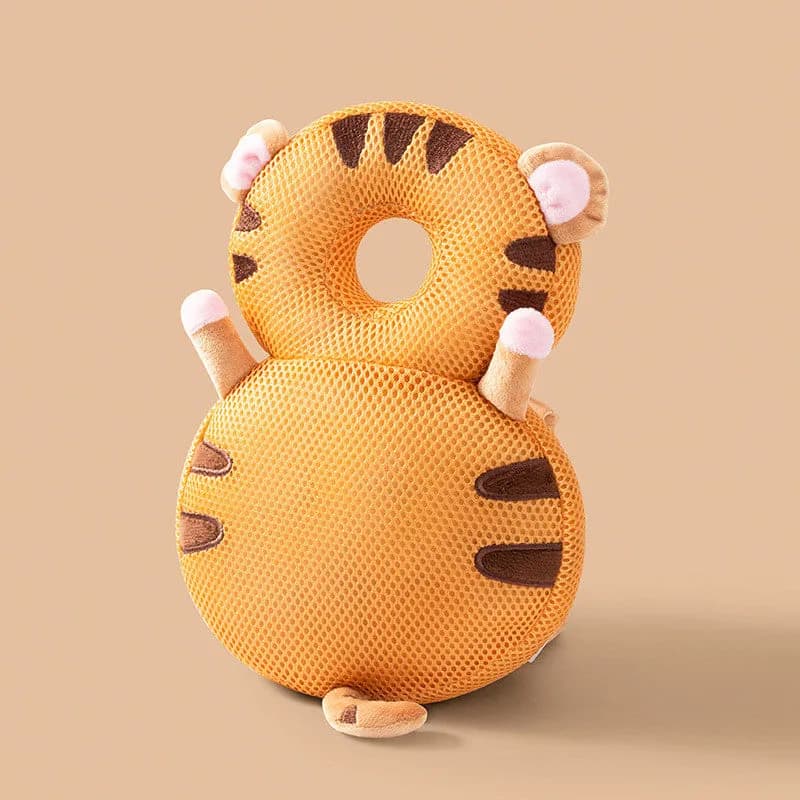
A soft head-and-back cushion earns its keep specifically in this window — it's built around exactly this fall pattern, cushioning the backward landing during the exact months pulling-to-stand produces the most falls.
When pulling to stand becomes cruising
Once a baby can hold a standing position confidently (often within a few weeks of first pulling up), the next stage is cruising — moving sideways along furniture with one or two hands. Falls during cruising tend to be more sideways than backward, which is a good sign that balance is catching up to strength.

Crawl & Cuddle
A soft head & back cushion for exactly this stage
190 g, breathable 3D mesh, adjustable from 5 to 24 months — built around the backward-fall pattern this article covers.
Shop all ten stylesFrequently asked questions
Why does my baby fall backward every time they pull to stand?
Because the strength to pull upright develops before the balance and reflexes needed to stay upright or catch a fall. It's a normal, temporary gap in development.
How long does the pulling-to-stand fall-heavy stage last?
Typically 4 to 8 weeks from when pulling to stand begins, though it varies by child and depends on how much practice and floor time they get.
Should I stop my baby from pulling to stand if they keep falling?
No — discouraging the attempt slows the milestone without removing the fall risk, since the falls are how balance and strength calibrate. Focus on making the landing safer instead.