

The main risk with an older, more active sibling isn't malice — it's speed and unpredictability. Running games, quick direction changes, and shared floor space create a real chance of a crawling baby being bumped or tripped over, especially since a running child often doesn't see a baby at floor level in time to stop.
Why this risk is easy to underestimate
A crawling baby is low, quiet, and fast-moving in unpredictable directions — exactly the profile that's hardest for a running 4- or 6-year-old to track and avoid. It's rarely intentional; it's a visibility and reaction-time problem on both sides. An older sibling genuinely may not see the baby until they've already collided.
Practical household strategies
Designate certain times or zones for higher-energy sibling play (a specific room, or after the baby's floor-time session ends) rather than trying to fully separate them all day, which usually isn't realistic or desirable for sibling bonding. Keep running games to open outdoor space or a room the baby isn't currently in. During shared floor time, sit close enough to intervene quickly — this is a moment where hands-on supervision matters more than most.
Setting expectations with an older child
Simple, concrete language works better than abstract warnings — 'walking feet near the baby' lands better than 'be careful.' Praise gentle behavior specifically and immediately when you see it, which reinforces the habit faster than correcting the running after the fact.
Extra cushioning during shared play
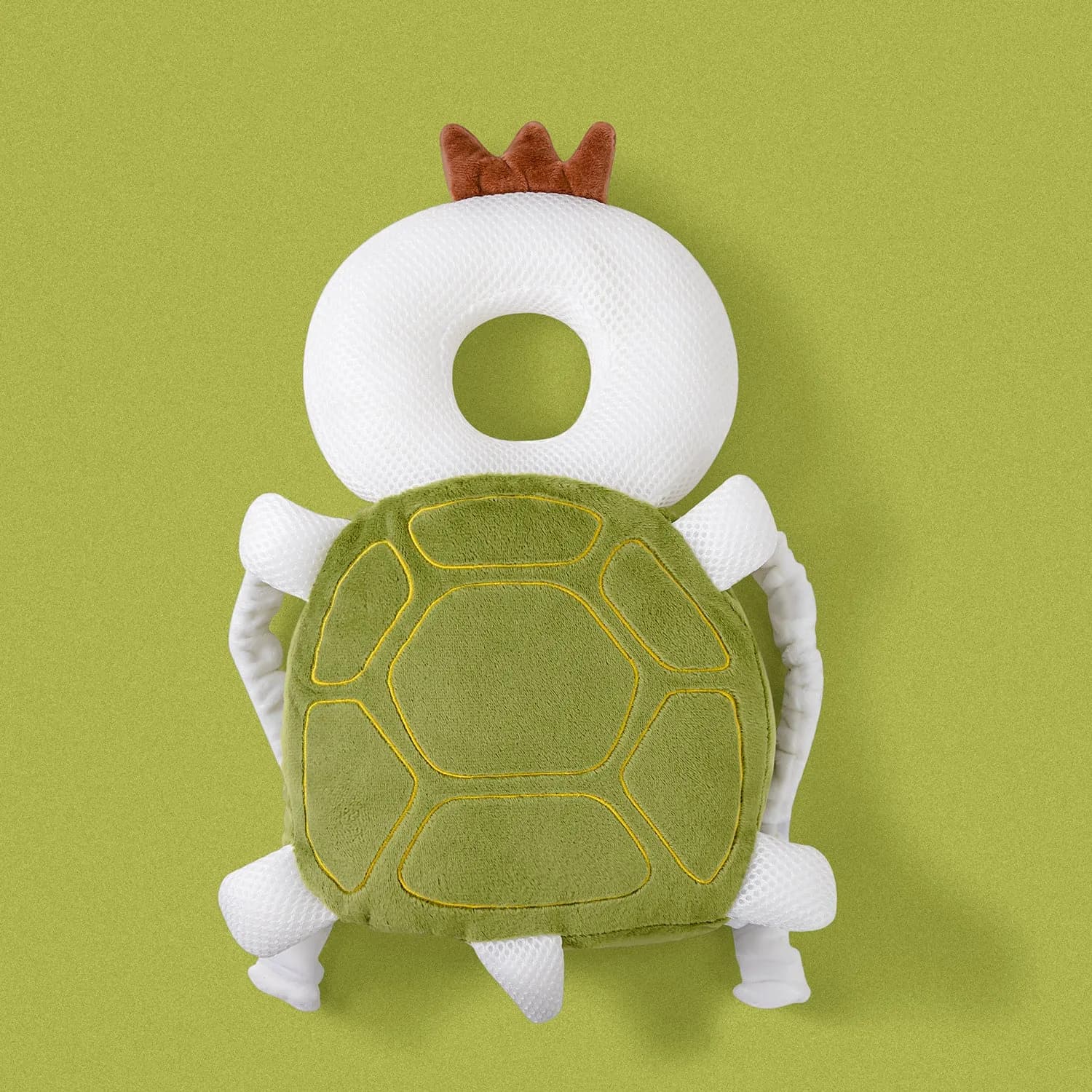
A head-and-back protector is a sensible layer specifically during mixed-age floor time — it won't prevent a collision, but it changes the outcome of the most common one (a sideways bump that sends the baby down backward or sideways) from a hard landing to a cushioned one.

Crawl & Cuddle
A soft head & back cushion for exactly this stage
190 g, breathable 3D mesh, adjustable from 5 to 24 months — built around the backward-fall pattern this article covers.
Shop all ten stylesFrequently asked questions
Is it normal for an older sibling to accidentally knock over a crawling baby?
Yes, quite common — it's usually a visibility and speed issue rather than rough behavior, especially with siblings under about 6 who are still developing their own spatial awareness.
Should I separate my kids during play?
Full separation usually isn't necessary or ideal — designated zones or times for higher-energy play, combined with close supervision during shared floor time, works well for most families.
How do I teach a toddler to be gentle with a baby sibling?
Concrete, specific language ('walking feet,' 'gentle hands') and immediate praise for gentle behavior tend to work faster than general warnings after the fact.