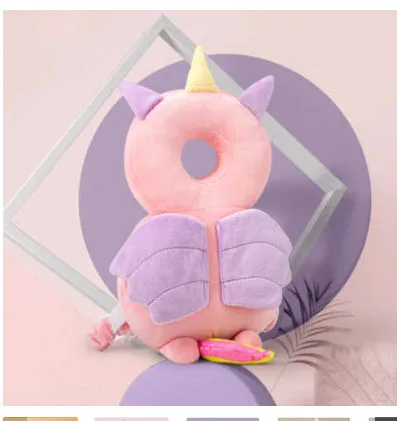
Most toddlers no longer need a head-and-back protector by 24 months, once walking is steady enough that backward tip-overs become infrequent and protective reflexes (bracing with the hands, twisting to catch a fall) are reliably in place. Some children, especially early walkers, may benefit from a few extra months.
The signs balance has caught up
Watch for these together, not any single one in isolation: your toddler can stop suddenly while walking without toppling, can turn around without losing balance, reaches for objects while standing without falling, and — most tellingly — when they do fall, they increasingly catch themselves with their hands or land sideways rather than straight backward onto the head.
Why 24 months is a reasonable general marker
By two years, most toddlers have several months of confident independent walking behind them, and the protective reflexes that were still developing at 12–15 months have generally caught up. This isn't a hard cutoff — it's the point where the backward-tip fall pattern this entire product category addresses has usually become the exception rather than the norm.
Exceptions worth knowing
Early walkers (walking confidently before 11 months) sometimes benefit from a longer window, simply because they're upright and mobile well before the typical reflex-maturation timeline. Children on uneven or hard flooring at home, or in a high-activity daycare setting, may also reasonably continue a bit past 24 months. There's no downside to continuing use a little longer if your toddler is comfortable wearing it — the only real signal to stop is that it's genuinely no longer needed, not a fixed calendar date.
Transitioning away from it
Most families taper off naturally rather than stopping abruptly — using it for higher-risk situations (new environments, tired end-of-day play, outdoor uneven ground) even after daily indoor use has stopped. There's no harm in that gradual approach, and it often lines up naturally with when a toddler starts preferring not to wear it anymore.

Crawl & Cuddle
A soft head & back cushion for exactly this stage
190 g, breathable 3D mesh, adjustable from 5 to 24 months — built around the backward-fall pattern this article covers.
Shop all ten stylesFrequently asked questions
Is there a hard age limit for using a head protector backpack?
No fixed limit — most families stop around 24 months as balance and reflexes mature, but continuing longer is harmless if your toddler is still comfortable wearing it.
Do early walkers need a head protector longer?
Often yes, simply because they're mobile before their protective reflexes have fully matured, which can mean a longer useful window than a baby who starts walking closer to 14–15 months.
How do I know my toddler doesn't need it anymore?
Look for consistent signs together: stopping and turning without falling, catching themselves with their hands during a stumble, and a general drop-off in backward, unbraced falls.